Earlier this year I was invited to a small ecumenical gathering in Anchorage Alaska to give a short presentation—from the Protestant side—about The Joint Declaration on the Doctrine of Justification (JDDJ). For the uninitiated, the JDDJ is—as the name suggests—a declaration of agreement between Catholics and Protestants on the doctrine of justification.[1] The gathering was centered around a presentation given by Dr. Michael Root, one of the framers of the JDDJ, and was attended by clergy and bishops of the local Catholic and Lutheran dioceses. According to its own self-understanding, the JDDJ “effectively resolves one of the key theological conflicts of the Reformation, the understanding of salvation.”[2] In the ecumenical world, the JDDJ represents the most significant rapprochement between Catholics and Protestants since the Reformation.
But many evangelicals are not convinced. The few evangelicals I met at the gathering were curious, but hesitant. Michael Horton (who, to be clear, was not at the gathering) is a prominent evangelical Reformed theologian. He speaks for many evangelicals when he says that the JDDJ is—at the end of the day—a capitulation to the Roman Catholic side.[3] Approvingly quoting Lutheran theologian Eberhard Jüngel’s critical assessment of the JDDJ, Horton suggests that the JDDJ’s claim to theological consensus rests upon theologically “shaky ground.” And the concerns are not just from the evangelical Protestant side. Catholic theologian Christopher Malloy suggests that the JDDJ positions contemporary ecumenical theologians as “belated tutors” to the disputants of the sixteenth-century—and implies that contemporary theologians are better able to know than Luther (or the council fathers of Trent) what Luther (or the council fathers of Trent) “really” meant. [4]
For my part, I am sympathetic to the agenda of the ecumenical movement. Christ prayed that his people might be one, and it is right and good for us to work toward that end. But I also believe, like Horton and Jüngel and Malloy (and like many other evangelicals committed to the authority of Scripture and the central insights of the Reformation) that we must not merely gloss over our theological differences in order to achieve unity. As much as I am in sympathy with the JDDJ, I am not convinced it completely avoids doing this.
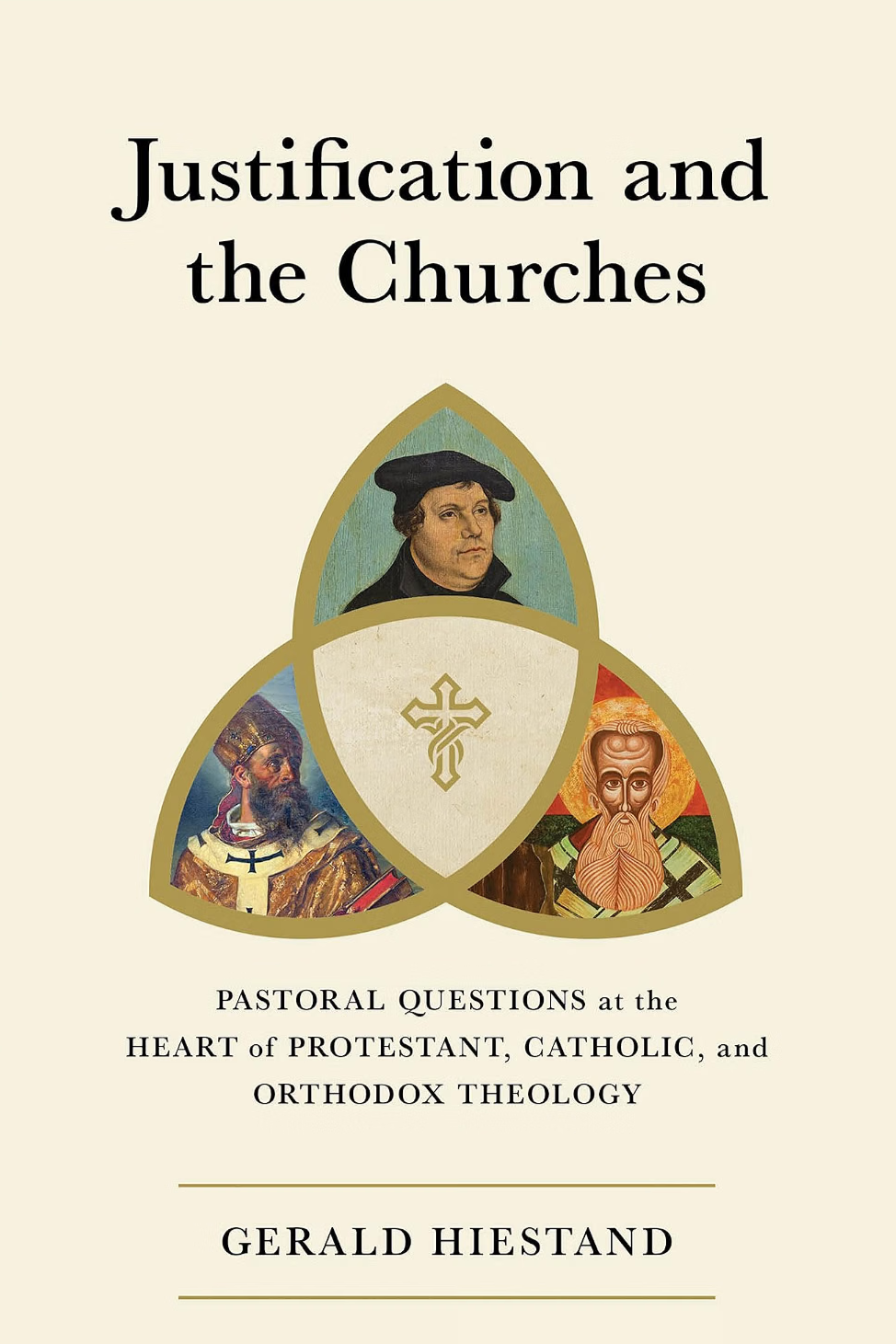
But I do think the JDDJ is on to something. And I believe that unity around the doctrine of justification is possible. My recent book Justification and the Churches: Pastoral Questions at the Heart of Protestant, Catholic, and Orthodox Theology attempts to give an account of the theological unity that I believe exists between Protestants and Catholics (and the Orthodox) while acknowledging the very real challenges of our mutual theological anathemas.
The first chapter of my book begins with a close reading of Athanasius’ seminal work On the Incarnation. Notably, Athanasius’s work doesn’t mention the doctrine of justification. (Indeed, the “doctrine of justification” wasn’t yet a formal doctrine in the fourth century). Athanasius wrote to defend Nicaea’s account of Christ. Doing so required him to provide a robust account of human sin and finitude—the very things the Son’s incarnation was ordained to resolve. And that’s where Athanasius’ work becomes ecumenically fruitful for the doctrine of justification. Throughout his work, Athanasius highlights three distinct human needs—the need for extrinsic acquittal, the need for interior healing, and the need for eschatological glorification. My book begins by examining the legitimacy of all three needs, and then goes on to show how each tradition has built its respective doctrine of justification around one of these three distinct needs. As a sort of appetizer to my book, I offer a short summary below of Athanasius’ account of sin and suggest how this account opens new avenues for ecumenical conversations around the doctrine of justification.
Justification, Athanasius, and Humanity’s Three Needs
For Athanasius, sin, in the first instance is a willful transgression of God’s law that results in extrinsic guilt. This extrinsic guilt provokes the just condemnation of a righteous God whereby Adam and Eve were rightly sentenced to death (i.e., cast out of Eden into death). For Athanasius, extrinsic guilt can only be removed through the atoning cross of Christ, through which humanity’s extrinsic legal debt is paid. Importantly for Athanasius, extrinsic acquittal does not refer to the removal of sin’s corruption, but rather to the lifting of the divine decree that stands over and against the sinner and that, once removed, allows the sinner to return to God’s healing presence.
Athanasius’ account of sin, in the second instance, focuses on ontological “interior corruption.” For Athanasius, this interior corruption is distinct from extrinsic guilt. The interior corruption of sin renders the transgressor ontologically incapable of living (and loving) as God intended; and if left unchecked, it will completely “uncreate” humanity. But through the sinner’s union with the Holy Spirit, God heals the wound caused by sin and thus renders the human soul capable of once again loving God and others. Notably, interior healing is not accomplished chiefly by Christ’s work of atonement on the cross, but more immediately through the Holy Spirit’s work of regeneration.
And finally, for Athanasius, sin in the third instance stands in the way of humanity’s “eschatological glorification”—what Athanasius and the East typically referred to as “theosis.” In Athanasius’ framework, God will one day perform an eschatological work of glorification whereby he will make the temporal human nature wholly like Christ's deified human nature. This eschatological glorification will happen on the other side of the judgment, and will be a requirement for entering fully into “eternal life.” For Athanatius, eschatological glorification is neither extrinsic acquittal, nor ontological healing. Nor is it simply a return to humanity’s original pre-sin condition in Eden. Rather eschatological glorification is the realization of the destiny toward which human creatures have always been pointing. Technically speaking, humanity’s need for eschatological glorification is not a “soteriological” need at all. Rather it stems from humanity’s existence as mutable, finite creatures. For Athanasius, even unfallen Adam and Eve needed to be eschatologically glorified.
The JDDJ, Justification, and the Three Needs
A central argument of my book is that each Nicene-Chalcedonian tradition has focused its soteriological attention on one of these three needs. I am a fan of the JDDJ, and believe it is on the right track. My primary critique of the JDDJ is that it fails to fully reckon with each tradition’s primary soteriological need. Consequently, the JDDJ tends to assume that the Protestant and Catholic doctrines of justification are trying to resolve the same soteriological need. But what if each tradition is animated by a distinct pastoral question, and thus are addressing a distinct soteriological need? And what if the doctrinal solutions to our differences will not be found by merging our two doctrines into a single doctrine (as the JDDJ attempts to do), but by allowing each tradition’s doctrine to stand on its own and answer its own legitimate question in its own legitimate way?
Insofar as the Protestant tradition emphasizes sin as an extrinsic legal guilt, it makes sense that its doctrine of justification emphasizes extrinsic legal acquittal. Insofar as the Catholic tradition emphasizes sin as interior corruption, it makes sense that its doctrine of justification emphasizes interior healing. And given Eastern Orthodoxy’s emphasis on eschatological glorification (a non-soteriological act of God), it makes sense that it never really developed a formal doctrine of justification at all.
All three needs are legitimate—they are affirmed by Scripture and the Church Fathers. And all three needs are affirmed by all three traditions. How all of this relates to the doctrines of justification as articulated by each tradition, and how these respective accounts of justification relate to each other, is more than I can tell here, of course. You’ll have to read the book.
But I am hopeful that as we better understand the chief pastoral questions that animate each tradition’s soteriology, we will better understand each tradition’s doctrine of justification. Different doctrinal solutions to different pastoral needs is not the same thing as different doctrinal solutions to the same pastoral need. Perhaps if we listen patiently enough, we may yet see that our respective doctrines of justification—though distinct, are not contradictory. And we may even see they are complementary.
As I said, you’ll have to read the book.
[1] The JDDJ was signed in 1999 by Lutheran and Catholic officials at the highest levels, and was later signed by the World Methodist Council, the Anglican Consultative Council, and the World Communion of Reformed Churches.
[2] JDDJ, 5.
[3] Michael Horton, Justification, Vol. 1, in New Studies in Dogmatics, eds. Michael Allen and Scott Swain (Grand Rapids: 2018), 25-26.
[4] Christopher J. Malloy, Engrafted into Christ: A Critique of the Joint Declaration (New York: Peter Lang Publishing, 2005), 37.
Read Gerald’s book:

Gerald Hiestand is Co-Founder, Board Chair, and a Senior Fellow of the Center for Pastor Theologians. He serves as the Senior Pastor of Calvary Memorial Church in Oak Park, IL. He is the editor and author/co-author of several books, including The Pastor Theologian: Resurrecting an Ancient Vision. He holds a PhD in Classics from the University of Reading.