Believing that Christ’s resurrection triumph is to be translated into the structures of the world, the church has become a triumphalist institution working to impose “Christian values” (either left values or right values) on the world around us, but in so doing has become captive to the world. This mistaken understanding of presence has led us to the place we find ourselves today, mired in division along political-ideological lines, screaming at one another from entrenched positions provided to us by the options of a human political ideology, liberal democracy. We won’t be able to break out of these entrenched positions that are causing such deep division in the church until we free ourselves from the false view of the church’s relationship to history, and so to the powers of this age.
Trump, Christianity Today, and the Question of History (Part 1)
Evangelicalism, due to its particular way of living out the assumption of the church’s relationship to history, has become accustomed to analyzing political candidates based on how “Christian-ly” they will wield the powers of this world. In the past, the criterion for voting for a candidate was rooted in the character of the candidate; we can call this the “character criterion.” Assuming alignment on social issues, evangelicals would vote for the candidate with the best character to lead the government in a manner consistent with Christian “values.” (This was why George W. Bush was such a favorite: His conversion story gave comfort to evangelicals that this was a true follower of Christ, a man of character who would lead the country in a manner worthy of Christ.)
When the Bible Becomes Your Roommate: On Pastors and Original Languages
We should be spending a little bit of time working at Greek and Hebrew on most days—maybe 10 minutes. For some of us that will mean taking a couple months to learn (or relearn) the alphabet. Eventually we might be translating a few words at a time, until we are eventually able to work through a whole paragraph or even chapter per day. After exhorting Timothy to “devote” (!) himself to reading and teaching Scripture, Paul tells him to “practice these things, immerse yourself in them, so that all may see your progress” (1 Timothy 4:15 ESV). We must practice so that we can make genuine progress. And, just as with marriage, we must not let our lack of progress in the past became an excuse for a paralyzed apathy in the present.
Why Pastoral Visitation is Essential (For Every Pastor)
The phrase “ivory tower” has been associated with the office of theologian. It’s the idea of a “privileged seclusion” so that individual can pursue whatever endeavor without interference or distraction. I have jokingly used the phrase, “Ministry would be great if it weren’t for the people.” I have known seminary students who believed that they could find a pastorate in which they would show up to preach and otherwise be left alone. (Some of those students later changed their aspirations to becoming a professor.) But that is not the model of the pastor that we find in the Bible.
The Word Made Flesh
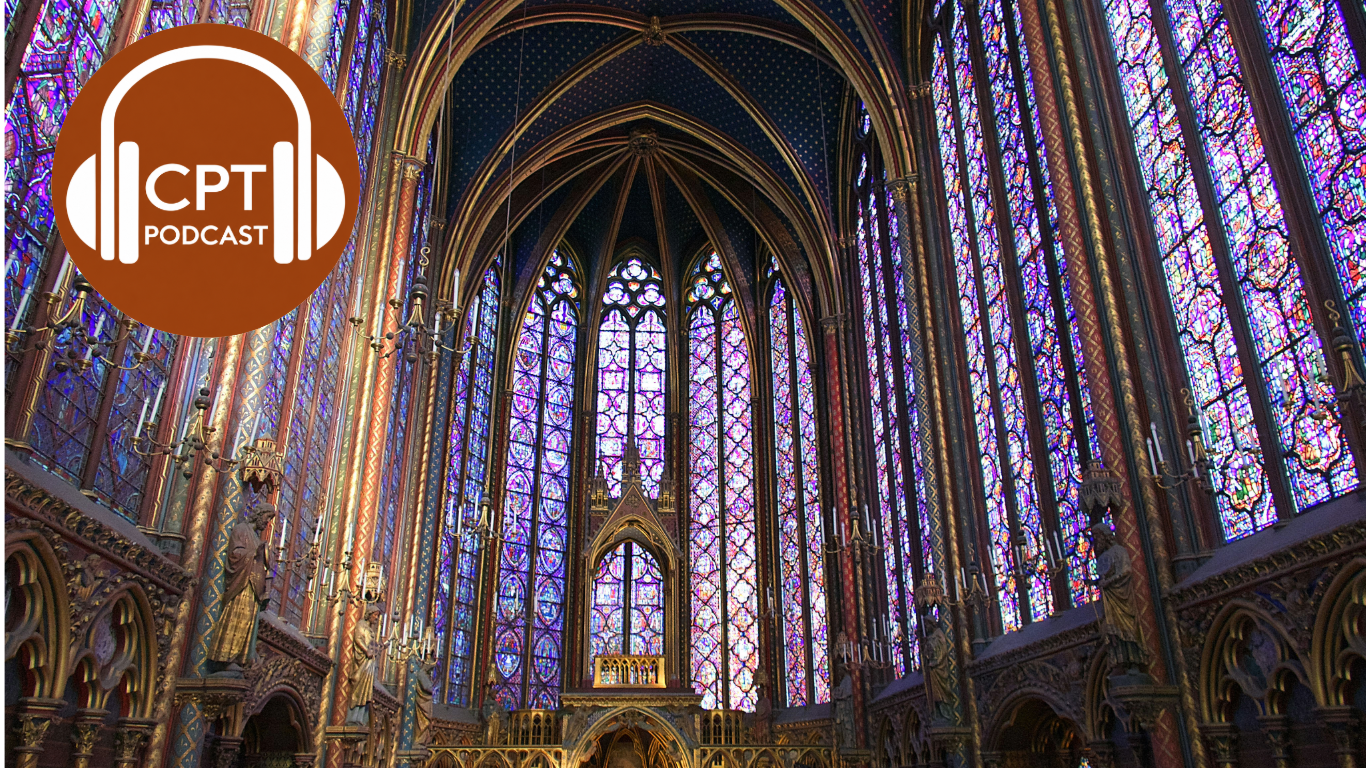
God’s eternal Word has taken to himself our frail flesh, born as one of us. He has embraced as his very own our weakness and fragility, our transience and loss, our sorrows and our griefs. In his flesh, he has entered the deepest depths of our experience.As we sit in our studies and pay heed to Augustine, or Luther, or Edwards, they invite us to leave cramped and crowded walls of our own small understanding, and to step with them into the soaring cathedral of divine truth.
Three Reasons to Give Thanks – Thomas Manton on Gratitude to God
The Scholar's Head with the Shepherd's Heart – An Interview with CPT President, Todd Wilson
If you love the church and yet love academics, or love academics and yet love the church—don’t fall into the trap of thinking that you have to choose.
Six Questions I Ask Pastors That Are Interested in Pursuing a PhD
I have been asked several times by pastors if they should pursue a PhD (or related research doctoral degree). The short answer is, “It depends.” I have several questions that I ask them to help diagnose if I would or would not recommend them pursing a research doctoral degree, especially if they plan to serve in vocational ministry. Here are some of those questions:
Gratitude for the Great Tradition: On John Webster's "Theology in the Order of Love" (Part 2)
According to Webster, this posture of gratitude entails a willingness to lay aside our own pressing interests. It also entails a willingness to pay close attention to the interests of others. This humble displacing of self offers the hope of immeasurable enrichment. Attention to the traditions of the church is attention to the the saints of God as they strain to hear his voice and pass on what they have heard. And, says Webster, it ushers us into “the possibility of a more spacious domain, a greater store of intellectual goods.”
As we sit in our studies and pay heed to Augustine, or Luther, or Edwards, they invite us to leave cramped and crowded walls of our own small understanding, and to step with them into the soaring cathedral of divine truth.
Gratitude as Intellectual Virtue: On John Webster's "Theology in the Order of Love" (Part 1)
Prayer and thanksgiving are not just something we do at the beginning or end of a morning’s theological work. They are the atmosphere in which theology lives, the native air our thinking breathes as the motion of our mind comes from and returns constantly to the God from whom, through whom, and for whom our intellectual labors exist.