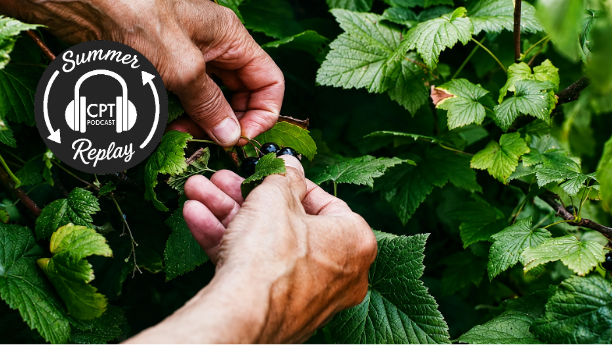
In this Summer Replay episode, CPT Fellow Matt Erickson reflects on his journey into pastoral ministry and the experiences that led him to write The Pastor as Gardener: A Renewed Vision for Ministry. Drawing on biblical images of planting, tending, and growth, Matt offers a vision of pastoral ministry rooted in patience, community, and dependence on God rather than performance or control. The conversation explores how pastors can cultivate a deep life with God, empower others for ministry, and faithfully plant for fruit they may not live to see.scription here
REPLAY: Preaching as Theology | Nicole Martin
REPLAY: Keep Careful Watch On Your Life | JIM SAMRA
Becoming a Friendlier Church | Matthew Kim
Becoming a Pastor Theologian | Heather Joy Zimmerman

In this episode of the Pastor Theologians Podcast, we invite Heather Joy Zimmerman, a member of CPT's St Irenaeus fellowship, to share how profound personal suffering shaped both her faith and her calling. Reflecting on the loss of a close friend, her father's battle with cancer, and her journey through lament, Heather explains how God used Scripture—especially Romans 8 and the Psalms—to deepen her understanding of God's goodness and inspire a lifelong passion for helping others faithfully navigate suffering.
Heather also traces her path from Moody Bible Institute to Dallas Theological Seminary and Wheaton College, where her academic work on the Psalms of lament and preaching emerged from her own spiritual journey. She discusses her passion for theological education, forming faithful preachers, and bridging the gap between the academy and the local church. The conversation offers a compelling vision of the Pastor Theologian—one whose scholarship is rooted in personal faith, pastoral ministry, and a deep love for Christ and his people.
Men of Virtue | Zachary Wagner
In this episode of the Pastor Theologians Podcast, we invite CPT fellow and Wesleyan pastor Ben Espinoza to talk about his new book, The Good News About Self-Care: How Nurturing Your Soul, Yourself, and Your Sanity Honors God. Ben shares his journey into ministry, theological formation, and the experiences that shaped his understanding of Christian self-care.
Ben reflects on how ministry pressures, ambition, and the COVID-19 pandemic exposed unhealthy patterns in his own life. He explains that self-care is not a secular pursuit of comfort, but a theological practice rooted in honoring the image of God within us. The conversation explores Sabbath, limits, vocation, and spiritual health, with Ben encouraging pastors and leaders to embrace rest, prayer, boundaries, and accountability so they can faithfully serve others.Cole reflects on how intentional spaces, hospitality, and deep relationships create opportunities for spiritual growth, and how his experience pastoring in a walkable, close-knit town has shaped his understanding of the pastor theologian’s calling. We explore questions of place-making, community, discipleship, and what the church can learn from the environments where ministry happens.
Becoming a Pastor Theologian | Jeff Hubing
In this episode of the Pastor Theologians podcast, we invite Jeff Hubing to share his journey into pastoral ministry, shaped by personal tragedy, a deep love for Scripture, and a desire to connect theology with everyday life. He reflects on how his father’s faith influenced his calling, his theological studies, and his work leading a network of house churches in Chicago. Jeff discusses a vision of church leadership centered on family, discipleship, and raising up others—not simply gathering crowds, but equipping and releasing people for the work of ministry.
Ben reflects on how ministry pressures, ambition, and the COVID-19 pandemic exposed unhealthy patterns in his own life. He explains that self-care is not a secular pursuit of comfort, but a theological practice rooted in honoring the image of God within us. The conversation explores Sabbath, limits, vocation, and spiritual health, with Ben encouraging pastors and leaders to embrace rest, prayer, boundaries, and accountability so they can faithfully serve others.Cole reflects on how intentional spaces, hospitality, and deep relationships create opportunities for spiritual growth, and how his experience pastoring in a walkable, close-knit town has shaped his understanding of the pastor theologian’s calling. We explore questions of place-making, community, discipleship, and what the church can learn from the environments where ministry happens.
Good News About Self Care | Ben Espinoza
In this episode of the Pastor Theologians Podcast, we invite CPT fellow and Wesleyan pastor Ben Espinoza to talk about his new book, The Good News About Self-Care: How Nurturing Your Soul, Yourself, and Your Sanity Honors God. Ben shares his journey into ministry, theological formation, and the experiences that shaped his understanding of Christian self-care.
Ben reflects on how ministry pressures, ambition, and the COVID-19 pandemic exposed unhealthy patterns in his own life. He explains that self-care is not a secular pursuit of comfort, but a theological practice rooted in honoring the image of God within us. The conversation explores Sabbath, limits, vocation, and spiritual health, with Ben encouraging pastors and leaders to embrace rest, prayer, boundaries, and accountability so they can faithfully serve others.Cole reflects on how intentional spaces, hospitality, and deep relationships create opportunities for spiritual growth, and how his experience pastoring in a walkable, close-knit town has shaped his understanding of the pastor theologian’s calling. We explore questions of place-making, community, discipleship, and what the church can learn from the environments where ministry happens.
Becoming a Pastor Theologian | Cole Feix
In this episode of the CPT Podcast, we welcome Rev. Cole Feix, pastor of Carlton Landing Community Church and a member of the CPT’s St Irenaeus Fellowship. Cole shares his journey from faith exploration and theological formation to pastoral ministry in a unique new urbanist community.
Cole reflects on how intentional spaces, hospitality, and deep relationships create opportunities for spiritual growth, and how his experience pastoring in a walkable, close-knit town has shaped his understanding of the pastor theologian’s calling. We explore questions of place-making, community, discipleship, and what the church can learn from the environments where ministry happens.
Rediscovering Pastoral and Church Identity | Ryan Jackson
When everything around a church is changing, how can it rediscover who God has called it to be?
In this episode we welcome Rev. Dr. Ryan Jackson, Senior Pastor of the Capital Church near Raleigh, North Carolina, to talk about his experience in the CPT's first Church Identity Cohort.
Ryan reflects on 17 years of ministry through seasons of change, staff transitions, and post-pandemic challenges that prompted his church to revisit foundational questions of identity and mission. We discuss the connection between pastoral and ecclesial identity, the role of theological reflection in church life, and the importance of forming leaders who can faithfully guide congregations into the future.
We also explore the value of mentoring, cross-denominational dialogue, and collaborative discernment as churches seek a deeper understanding of who God has called them to be.
Whether you're a pastor, church leader, or ministry team member, this episode offers practical encouragement for leading with clarity, conviction, and a strong sense of church identity.