The views expressed in this article are of the author only and do not necessarily represent those of the Center for Pastor Theologians.
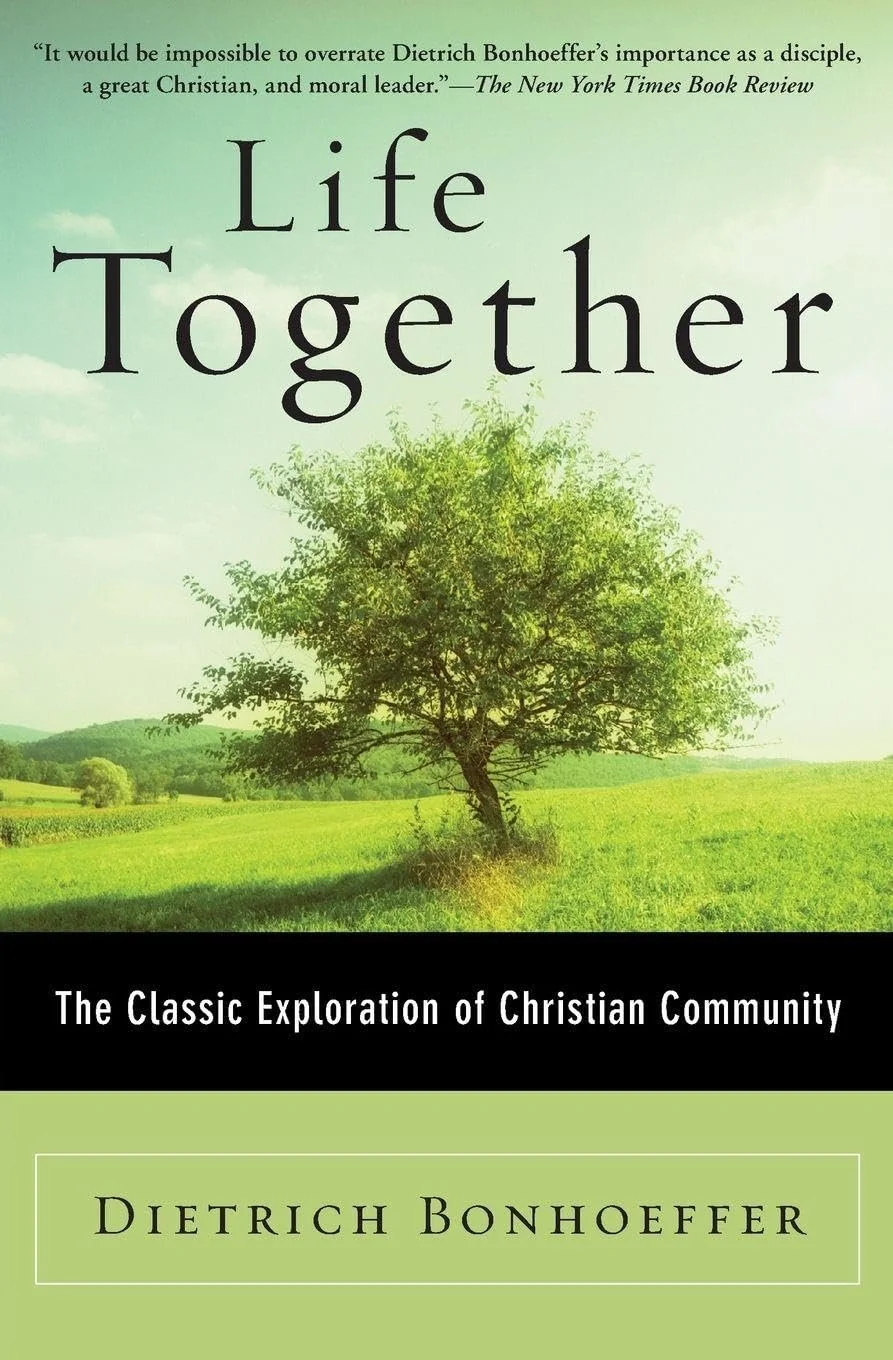
Life Together
Dietrich Bonhoeffer
Harper Collins (1954). 122 pp.
The American Evangelical church is a fragmented mess. In large part, this plight stems from technological advancement. Now, technology helps us fit more things into an already crowded day. As such, we are over-booked and over-tired. There is little time and even less energy to enjoy true Christian community. Today’s climate offers scant opportunity to love our fellow disciples (John 13:35). There is even less of an opportunity to love our neighbors (Matt 22:39). Our chaotic culture isolates us from one another. This isolation hampers the church’s mission. The church needs to restore genuine community. In his book Life Together, Dietrich Bonhoeffer provides a blueprint for such a task.
In the opening chapter of Life Together, Bonhoeffer discusses the nature of Christian community. For Bonhoeffer, Christian community comprises a group with Jesus Christ in common (p. 21). It is nothing more, nothing less. It is a community that is a spiritual reality not a human ideal. He believes that problems occur as individuals misunderstand this difference. In human communities, individuals look at what is and dream of what might be. Then, they go about shaping the community into their own image of this ideal. In contrast, the Christian community receives its shape from Jesus. Christians enter the community of Christ— they do not renovate it. Thus, it is a community made for participation not improvement (p. 37). This community focuses on Christ, and as it does, He provides the substance of its “unity” (p. 39).
Bonhoeffer contends that communal life focuses on Christ. The day begins with morning worship. It continues as a day of prayer-filled work. It concludes with evening devotions. For Bonhoeffer, this fellowship is a constant communion, not a periodic gathering. In describing this constant communion, he offers helpful strategies for corporate worship. He discusses the order of worship for morning devotions. He offers advice on mid-day prayers. Then, he describes how families should spend evenings practicing forgiveness and reconciliation. He reminds his readers that church begins with the family and not the weekly gathering of the saints.
After discussing communal life, Bonhoeffer moves to the time that Christians spend alone. He advocates the spiritual disciplines of Bible meditation, prayer, and intercession. He believes these disciplines strengthen the individual. Since the individual is part of the community, these practices strengthen the fellowship too. For Bonhoeffer, the health of the community reflects the health of the individual. Healthy individuals make healthy communities. And healthy individuals practice Bible meditation, prayer, and intercession.
For Bonhoeffer, healthy fellowships serve others. In contrast, sick fellowships stay embroiled in internal power struggles. These two perspectives affect one’s living out of the doctrine of justification. Healthy fellowships exhibit justification by grace. Sick communities concern themselves with self-justification.
In Bonhoeffer’s thinking, Christian fellowship reaches its goal in confession and communion. He draws a sharp contrast between sin and confession. Sin isolates the believer from the community. Confession draws the Christian deeper into the fellowship. Sin leaves believers in the darkness. Confession calls believers into the light. In this atmosphere of authenticity believers “break through to the cross” (p. 113). A place where pride goes to die and humility learns to live. To Bonhoeffer, this communion around Christ is what Christianity is all about. And it is this fellowship that all communities should imitate.
In Life Together, Bonhoeffer provides six characteristics of genuine community. Before restoring genuine community, the contemporary church must first recognize it. What does this genuine community look like? First, genuine community holds one thing in common—Jesus Christ. It does not concern itself with trivialities. It is the church of Jesus Christ, nothing else.
Second, genuine community is a perpetual experience not a slot on a calendar. The church is the church all day, every day. It is not just a corporate meeting on Sundays. Bonhoeffer reminds us that church is not something we do. It is something we are.
Third, genuine community depends on the spiritual vitality of each member of the fellowship. Thus, healthy churches are groups of maturing disciples of Jesus.
Fourth, genuine community lives out of grace not law. This way of living manifests itself in loving ministry. It edifies the community and serves the outside world.
Fifth, genuine community combats sin’s desire to isolate individual believers. It promotes grace and acceptance. It invites sinning individuals to come out of the darkness and into the light.
Sixth, genuine community transforms its members. It does this by fostering an environment of humility, empathy, and love. In essence, genuine community produces Christ imitators.
Genuine community, as Bonhoeffer’s understood it, is God’s prescription for the sick contemporary church. Fellowships that take this medicine will rediscover the centrality of Christ. They will also better reflect God’s glory into the shadowy places of this fallen world. This illumination will result in a deepening love for both God and neighbor. For Bonhoeffer, enjoying genuine community is experiencing a foretaste of God’s Kingdom on earth. The contemporary church would do well to listen to Bonhoeffer on this subject.
Todd Hardin (PhD, Southern Baptist Theological Seminary)