The views expressed in this article are of the author only and do not necessarily represent those of the Center for Pastor Theologians.
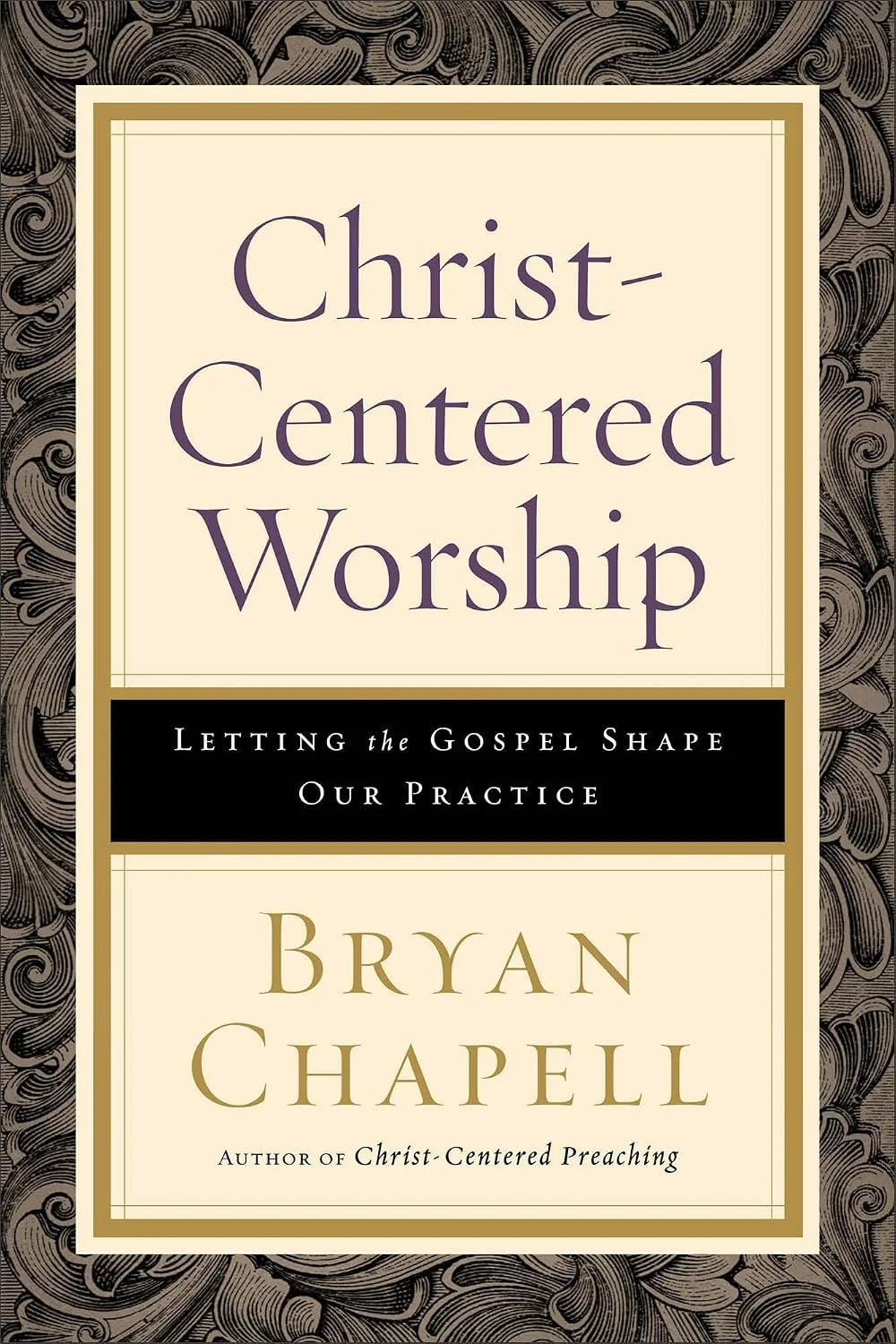
Christ-Centered Worship: Letting the Gospel Shape Our Practice
Bryan Chapell
Baker Academic (2009). 320 pp.
Many evangelical churches today fear the word “liturgy,” since it conjures up notions of Catholicism or ecumenism, and thus they neglect to establish patterns in their services that might communicate essential theological truths. What these churches often miss is the importance of repetition in the life of the believer, and the worship service is not excluded. Churches would do well to heed Bryan Chapell’s advice in Christ-Centered Worship. Repetition in worship is actually good and instructive, especially repetition that can be established within the redemptive-historical purview of the Bible like Chapell has done in this book. The sacraments are not repetitive because the gospel is not repetitive. We repeat them only to find that they are just as refreshing as in the first. According to Chapell, neither should worship services seem repetitive if the gospel is communicated so clearly as to be discerned even in the structure of the service. For Chapell, the gospel must be foremost if a church is to have Christ-centered worship.
Christ-Centered Worship is divided into two parts, “Gospel Worship” and “Gospel Worship Resources.” In the first part, Chapell lays out his general thesis, that the gospel should have priority not only in the planning of worship services but especially in the structure of the services. Structures tell stories, and thus gospel understanding is embedded and communicated in the worship patterns of the church (p. 17). The pattern in view is the liturgy of the church, and Chapell aims to show that churches tell the gospel story by the way they worship (p. 19).
This thesis is evaluated against the history of church tradition, beginning in Rome (Catholic) and extending through the Reformation period (Luther, Calvin, Westminster) and into the present age (Rayburn). Thus Chapell spends several chapters looking closely at the general structure of historical liturgies of worship services across two millennia. In addition, Chapell analyzes the “Liturgy of the Upper Room,” or the services in which the Lord’s Supper is presented to parishioners. The result of this dialogue with ancient practices is the discovery that worship patterns unite several centuries of Christians who worship similarly. The goal of reviewing past liturgies is to see that the designers had loftier goals than satisfying personal preferences. And so it is essential to communicate the gospel priority of worship since that priority is 1) scriptural, and 2) inherently non-individualist.
As Chapell concludes his historical analysis, he proposes a structure for worship that is based on the arc of the gospel storyline and “re presents” Christ’s story (pp. 116ff.). The essence of Christian worship is a re-presentation of the gospel, and thus congregations share the story of the progress of the gospel in their lives, week after week. In this way, “This progress of the gospel in our lives is the cause of our worship and the natural course of it” (p. 116). In parallel to the redemptive pattern of grace in the life of the believer, the following structure emerges, which Chapell entitles “Christ-Centered Worship” (pp. 118, 141):
Recognition of God’s Character (Adoration)
Acknowledgment of Our Character (Confession)
Affirmation of Grace (Assurance)
Expression of Devotion (Thanksgiving)
Desire for Aid in Living for God (Petition and Intercession)
Acquiring Knowledge for Pleasing God (Instruction from God’s Word)
Communing with God and His People (Communion)
Living unto God with His Blessing (Charge and Benediction)
Part 2 is a list of resources that churches can use when planning their services according to the structure above (pp. 157–304). There is a short explanation of each part of the service, followed by long lists of scriptural and/or written readings/prayers/hymns that can be used within each part.
Chapell’s emphasis on the gospel in liturgical practice is commendable and refreshing for several reasons. Chapell’s historical analysis is very helpful, if not revealing, and definitely instructive. Church leaders, pastors, and professors must draw upon the past to instruct the present. Refusing to hear the voices of past historical practices, traditions, interpretations, customs, etc. is negligent at best, if not naiveté and arrogance. I also appreciated the point Chapell makes at the conclusion of his historical review. He states that if a Christian with no knowledge of historical liturgy looked at the progress that these services have in common (Adoration, Confession, Assurance, Thanksgiving, Petition, Instruction, Charge, and Blessing), he or she would probably think that it reflects the progress of the gospel in the life of an individual (pp. 98–99). Therefore, modern churches that tend to neglect this pattern unwittingly denigrate the importance of the gospel of Christ.
One element of disagreement comes in chapter 8, “Christ’s Story,” in which Chapell reviews several patterns in Old and New Testament texts where his gospel structure is modeled (pp. 102–115). Aside from Isaiah 6, these patterns are so broad—meaning that they cover such large swaths of Scripture—that a gospel-centered structure is not easily discernable. In fact, it seems forced in some of his examples, like Romans 11–15 and Revelation 4–21 (pp. 110–11). In addition, Chapell states on numerous occasions that he is not implying that the biblical authors conscientiously set out to establish a gospel message in the structure of their worship, so much so that one begins to wonder if Chapell actually believes that what he is writing is true! (I counted six times where Chapell makes this disclaimer in this chapter alone: pp. 104, 105, 106, 107, 108, 111.) Chapell’s section on “Gospel Sensitivity” should be enough to establish his point. He states that “because [God’s people] have experienced his love, [they] love what and whom he loves—and their worship of him naturally includes expressions of such love” (p. 112). The heart of Christian worship is love for Christ. Therefore, believers express their love for God in Christ by responding to the way that he has expressed his for them (the gospel) in their worship liturgies. And so out of love for him Christians worship, “extolling his greatness, confessing our weakness, seeking his goodness, thanking him for his grace, and living for his glory” (pp. 112–13). This pattern is something that is discernable throughout the biblical witness. It does not need to be forced broadly into some of the texts that Chapell outlined earlier. It is enough to state what logically flows from his thesis: “Our worship has a gospel pattern not because we are coerced into such ritual but because our hearts are so compelled to love Jesus” (p. 113).
This minor disagreement aside, Christ-Centered Worship is tremendously helpful in advocating theologically rich worship that is informed and shaped by the gospel. It is a doxological tour de force, and I commend it wholeheartedly to teacher, student, pastor, and layman alike.

Joshua Philpot (PhD, Southern Baptist Theological Seminary) serves as the Pastor for Worship and Administration at Founder’s Baptist Church in Spring, TX. He is a member of the St. Peter Fellowship of the Center for Pastor Theologians.