The views expressed in this article are of the author only and do not necessarily represent those of the Center for Pastor Theologians.
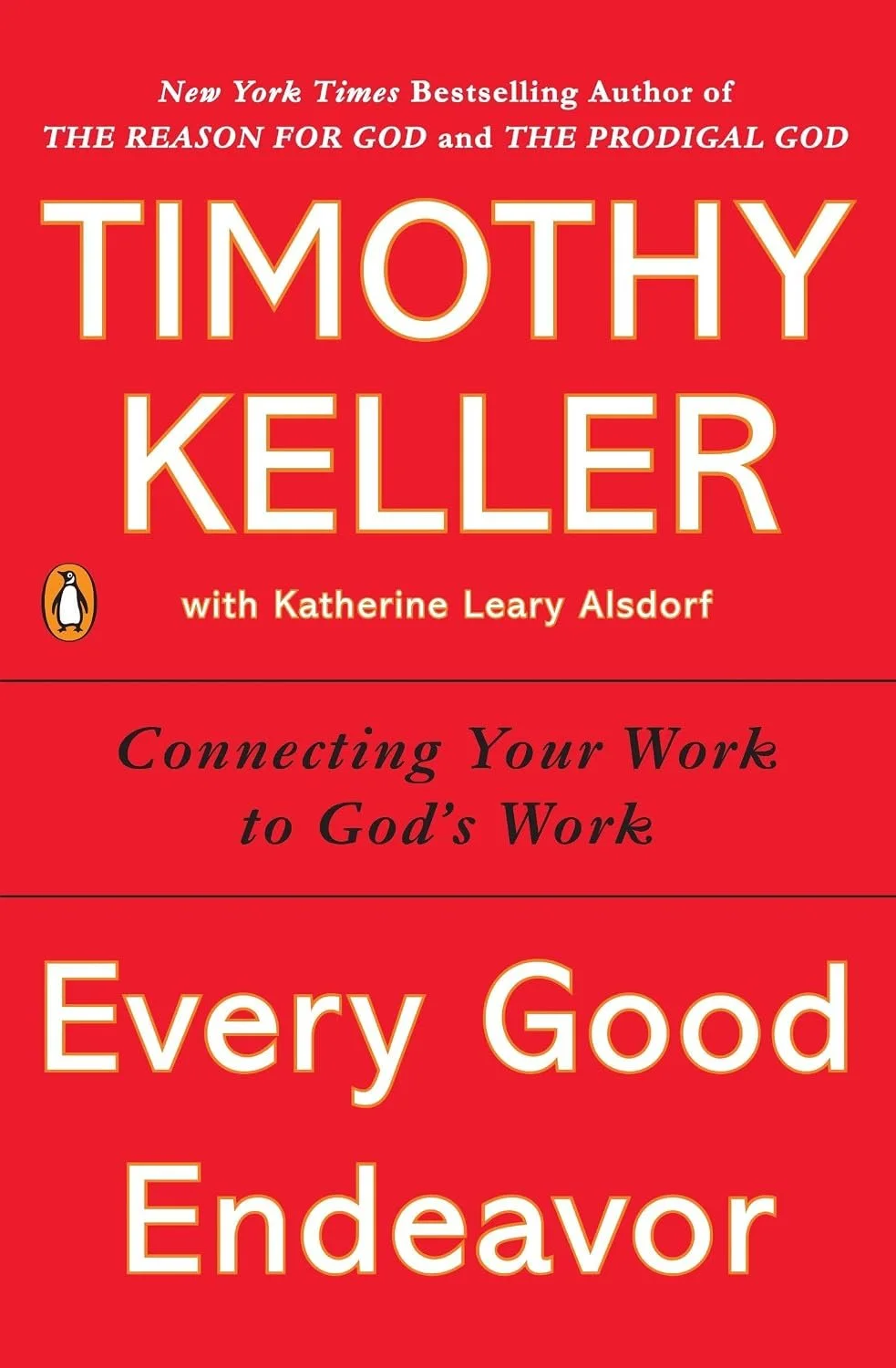
Every Good Endeavor: Connecting Your Work to God’s Work
Timothy Keller
Penguin (2014). 336 pp.
Timothy Keller, pastor of New York’s Redeemer Presbyterian Church and best-selling author, once again offers us his deep and penetrating insight in a powerful book on the connection between faith and work. Co-written with Katherine Leary Alsdorf, Founder of Redeemer’s Center for Faith & Work, the authors draw upon a variety of sources as they look to recover a fuller, more biblical understanding of how we think about work. Far too often, they lament, approaches to understanding a Christian’s work focus either on evangelism or making money in order to resource ministry. Yet neither of these address “the issue of how Christians’ faith should affect the way they work” (p. 12).
The book is divided into three clear sections. Part 1 begins with “God’s Plan for Work,” and here Keller thoughtfully unpacks the Genesis creation account. We are reminded that work is not a punishment, “but part of the blessedness of the garden of God” (p. 37). The Bible talks about work before it talks about anything else. God himself engages in work, and it is both orderly and good. Furthermore, the need to work is a part of our basic human makeup—something we were both designed and commissioned to do. In fact, Keller says we should expect a sense of inner loss and emptiness when we do not have meaningful work. Chapters 3 and 4 go on to explore work as cultivation and as service. Keller points out that while our cultural mandate is to develop and build society, the way that we “rule” and “subdue” our world is not by exploiting it, but by exercising good stewardship over it. We are called to bring order out of chaos and draw out creative potential—and whenever we do, “we are following God’s pattern of creative development” (p. 59). Our work, moreover, should be seen as a vocation by which we serve others. Here Keller builds upon Luther’s revolutionary teaching on work, emphasizing that we honor God when we love our neighbor and serve others through our work.
Part 2 moves on to talk about “Our Problems With Work,” explaining how sin’s entrance into our world leads to work becoming fruitless, pointless, selfish and idol-revealing. The Fall unravels the fabric of our world, “and in no area as profoundly as our work” (p. 84). As sin disorders and distorts, it causes shame, mistrust, painful labor and strained relationships. While work itself is not a curse, it nevertheless lies under the curse and feels its effects. Specifically, sin threatens the worker’s productivity, sense of confidence, and satisfaction. Keller weaves in biblical material from Ecclesiastes in his chapter entitled “Work Becomes Pointless.” He then follows this up with the stories of the Tower of Babel and Esther in Chapter 8, “Work Becomes Selfish.” Work offers us an opportunity, says Keller, not to serve ourselves or make a name for ourselves—but to use its resources to serve God and neighbor. The final chapter in this section, “Work Reveals Our Idols,” offers us Keller at his best as he builds upon his outstanding analysis of idolatry (see his Counterfeit Gods). Here we find an acute analysis of culture as Keller explains its shift from traditional, to modern, to now postmodern. Each culture has a particular way of distorting our view of work—whether by making idols out of stability and duty (traditional), out of progress and reason (modern), or even out of technology and human freedom (postmodern).
The final section of the book zeroes in on how the gospel provides a storyline for redeeming not just our souls, but our work as well. Keller tells us that Christianity offers a unique worldview that locates the problem in sin and the solution in grace. The world is good, but it is also fallen and needs to be (and will be) redeemed. As we understand the gospel storyline and reflect on God’s purpose in our world, this influences how we do our work. Keller supplies examples from the business world, journalism, the arts, and medicine. He urges us to see the gospel as a set of glasses through which we look at everything in our world (which culminates in a set of outstanding questions on page 181.) The last few chapters encourage a “new conception” for work (grounded in common grace) that helps us appreciate the good work of nonbelievers even while keeping ourselves fully and critically engaged with our culture. Christian faith also provides a “new compass” for work as we move away from a cost-benefit analysis mindset and see people as divine image-bearers to be embraced in love. Keller’s closing chapter highlights our “new power” for work that comes explicitly from the gospel. The gospel gives us a new passion for our work, even as it fuels us with a deep sense of rest. The Epilogue discusses the mission of Redeemer’s Center for Faith & Work and its various initiatives.
Early on in the book Keller says that he is attempting to bring together the various emphases of the different traditions within the “faith and work movement” and speak with consistency and greater clarity. I believe he has accomplished this. Every Good Endeavor is a joy to read; Keller is expert in weaving in historical and contemporary anecdotes from the realms of business, literature, philosophy and the arts. Along the way we hear from the likes of everyone from Luther and Calvin to Nietzsche, C.S. Lewis, Dorothy Sayers and Luc Ferry—all of whom make for great conversational partners. Fascinating snippets from the pen of Tolkien and the life of Mozart round out this enjoyable and mind-opening book. If the aim of the Redeemer imprint is to bring the power of the Christian gospel to every part of life—this book has hit the mark. I believe that scholars, pastors and educated lay leaders alike will gain much from this unique addition to the literature of faith and work.

Jason A. Nicholls (PhD, University of Marquette) is the Lead Pastor at Redeemer Missionary Church in South Bend, Indiana. He is a member of the St. John Fellowship of the Center for Pastor Theologians.