The views expressed in this article are of the author only and do not necessarily represent those of the Center for Pastor Theologians.
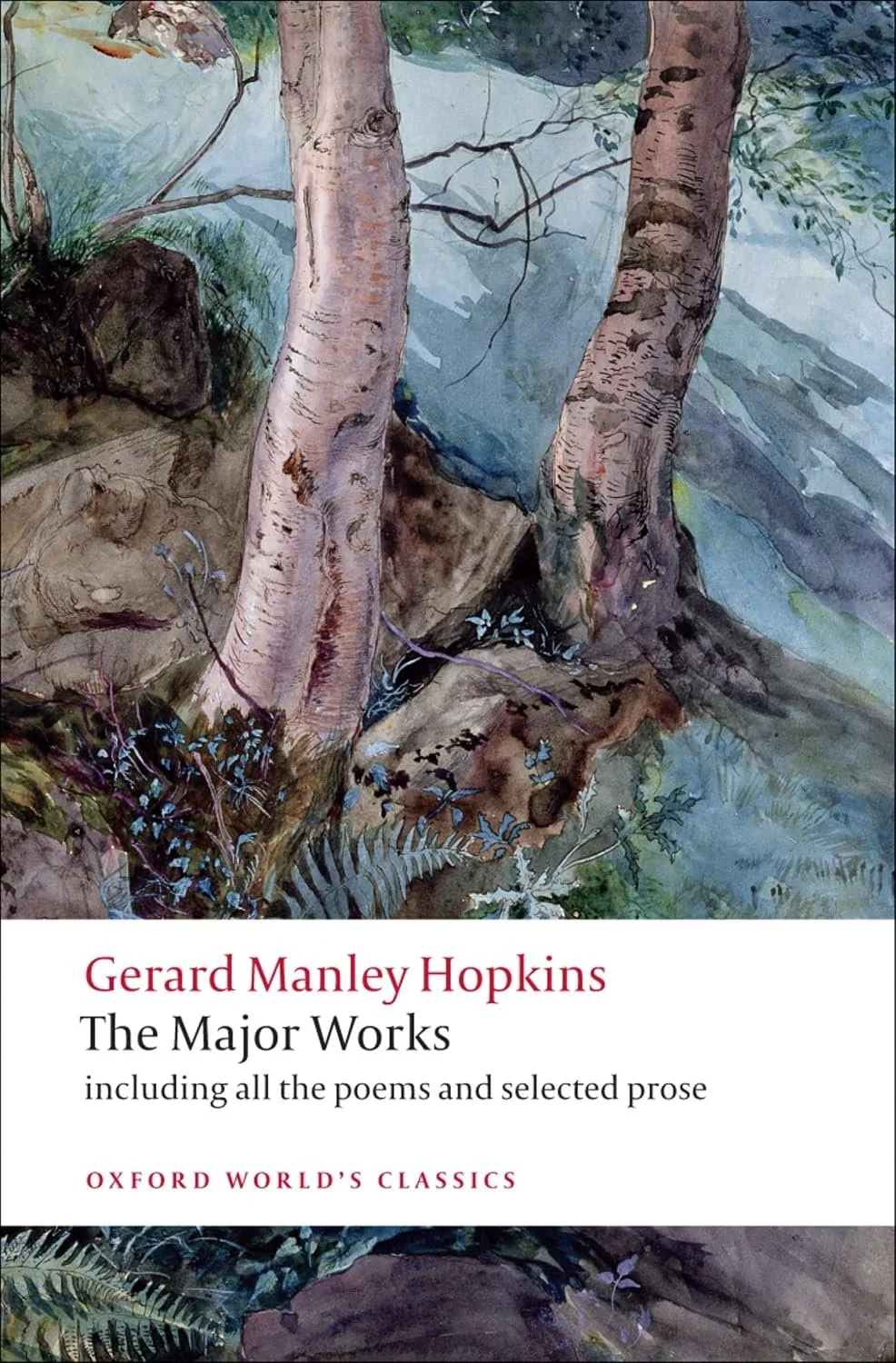
The Major Works, Including All the Poems and Selected Prose
Gerard Manley Hopkins, edited Catherine Phillips
Oxford University Press (2002). 429 pp.
Gerard Manley Hopkins, a convert to Catholicism under the influence of John Henry Newman in the 1860s, is best known for his poetry, although a series of diaries, journals, letters, and sermons also survive. These works have now been conveniently collected and provided with an introduction and notes by Catherine Phillips. I focus below on Hopkins’s poetry, and only here a small selection, drawing out representative themes of interest to a pastoral audience.
Hopkins is a profound observer of nature, and his poems consistently function like a lens through which the reader learns to see, with him, the sacramentality of creation. “The world is charged with the grandeur of God,” Hopkins writes famously, and despite humanity’s at-times troubling interventions—it “wears man’s smudge and shares man’s smell”—“nature is never spent,” because the Spirit continues to brood over it (God’s Grandeur, p. 128). This grandeur is, for Hopkins, evident mostly in the mundane. “Glory be to God for dappled things,” begins Pied Beauty—streaky, splotchy things like sky and cow, trout and chestnut, finches’ wings and plotted landscapes (pp. 132–33). But creation is not good in itself; it remains dappled and changeable, and so the poem ends praising the One “whose beauty is past change.” Many today recognize the goodness of creation. Hopkins penetrates further, telling us why it is good: it sacramentally shares in the life of God. But it also shares in the curse, and Hopkins is clear-eyed about the “subtle web of black”—that is, death—that wraps “trees and flowers round” and “lay along the grasses green” (Spring and Death, pp. 16–17). It is a good and cursed created order; there are no banal dichotomies here.
The same could be said of Hopkins as an observer of humanity, although here he tends toward a more melancholy, if not pessimistic, view. In The Sea and the Skylark—his critique of late-Victorian culture—nature, in the sound of a wave’s roar and a lark’s wings, shames modern man, and in a line as relevant now as then he writes, “Our make and making break, are breaking, down / To man’s last dust, drain fast towards man’s first slime” (p. 131). Over against modern confidence in a boundless humanity, Hopkins paints a picture of humans deeply constrained by finitude. He is tormented by a lack of productivity—“The whole world passes; I stand by”; his labors could amount to something, if he could “count on prediluvian age” (The Alchemist in the City, pp. 65–66; cf. To R. B., p. 184). Nor does the so-called spiritual life, of prayer and koinōnia, provide an escape from this finitude. Too often, in fact, these are a reminder of it. The title My Prayers Must Meet a Brazen Heaven says it all—a poem every pastor should read, memorize, and force upon his or her parishioners (p. 74). So too with his Nondum, in which he speaks what most of us stutter: “God, though to Thee our psalm we raise / No answer voice comes from the skies; / To Thee the trembling sinner prays / But no forgiving voice replies” (pp. 81–82). It is not only God who feels distant, but others too. Fellowship fails him: “To seem the stranger lies my lot” (To Seem the Stranger, p. 166).
What breaks through this malaise? Where may Christ be met and grace received? In some ways precisely through the other from whom Hopkins feels removed: “For Christ plays in ten thousand places, / Lovely in limbs, and lovely in eyes not his / To the Father through the features of men’s faces” (As Kingfishers Catch Fire, p. 129). But more centrally, it is Easter that is, for Hopkins, an apocalypse of grace. In That Nature is a Heraclitean Fire and Of the Comfort of the Resurrection (pp. 180–81), after line after line describing nature we read, “Enough! the Resurrection,” and the poem shifts dramatically (see also Easter, pp. 83–84). The resurrection, though, for Hopkins, needs something tangible, physical; it needs to come to us again and again. That is, it needs the Eucharist: “Pure fasted faces draw unto this feast: God comes all sweetness to your Lenten lips” (Easter Communion, p. 60). And it needs a place, an institution, a Church—and this may be Hopkins’s greatest challenge for us. In the last verse of The Half-way House Hopkins wrestles with a paradox. To see, love, and overtake God then, we must, in some sense, see, love, and overtake him now. Future reality is an intensification, not a denial, of present experience. So the question is where; where may Christ be met and grace received? “You have your wish; enter these walls, one said: / He is with you in the breaking of the bread” (p. 76). Hopkins’s answer? Church, and within her, Eucharist.
Protestants and evangelicals may not be prepared to go all the way with Hopkins. His Half-way House expresses his doubts about Anglicanism and precedes by months his own conversion to the Roman Catholic Church (see p. 321). But in an age of ironies such as ours—that deifies nature and yet is rapacious in its abuse; that is more connected and yet lonelier than ever; that is thrilled by technological advance and yet haunted by feelings of unproductivity; and, in the church, that is increasingly materialist and yet dismissive of material practices of worship—Hopkins’s theological poetics offers a more robustly Christian vision of creation (its sacramentality), of humanity (our finitude), and of the church and her sacraments (their primacy for grace) than much of what is currently on offer. And so, for pastor theologians, his is a voice worthy of our attention.

Benj Petroelje (PhD, University of Edinburgh) is the Pastor of 14th Street Christian Reformed Church in Holland, MI. Benj is a member of the St. Peter Fellowship of the Center for Pastor Theologians.