The views expressed in this article are of the author only and do not necessarily represent those of the Center for Pastor Theologians.
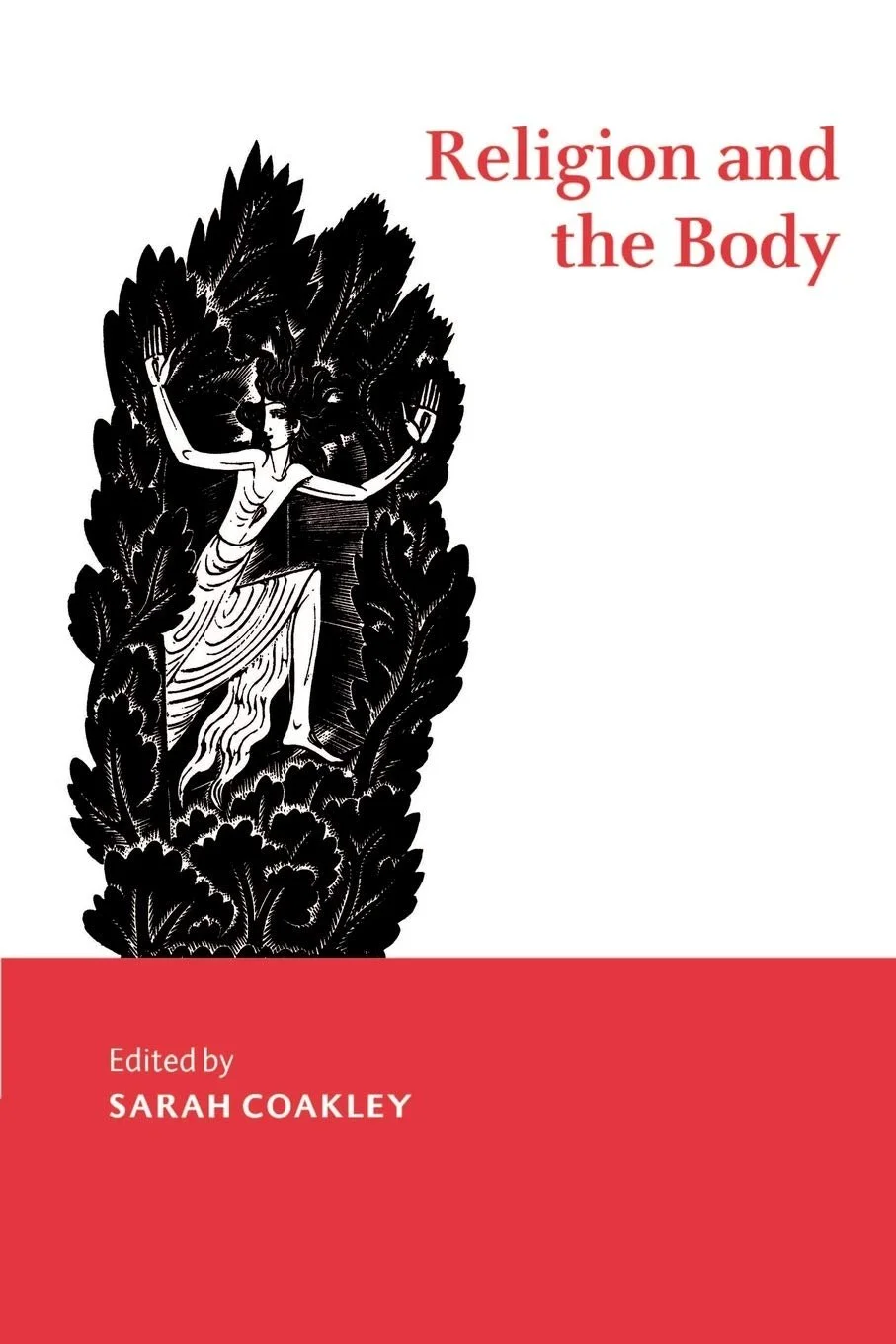
Religion and the Body
Sarah Coakley
Cambridge University Press (2000). 332 pp.
In an address to a group of Anglican clergy and youth workers, C. S. Lewis once summarized his approach to the search for enlightenment: “The only two things really worth considering are Christianity and Hinduism. Islam is only the greatest of the Christian heresies, Buddhism only the greatest of the Hindu heresies. Real Paganism is dead. All that was best in Judaism and Platonism survives in Christianity. There isn't really, for an adult mind, this infinite variety of religions to consider,” (“Christian Apologetics” in God in the Dock). Lewis’ analysis is surprisingly straight-forward to contemporary readers, almost quaint, as though finding ultimate meaning could be as simple as deciding which type of car to buy. In Lost in the Cosmos, Walker Percy gives a bracing diagnosis for our confusion: “You live in a deranged age—more deranged than usual, because despite great scientific and technological advances, man has not the faintest idea of who he is or what he is doing.”
Religion and the Body is refreshing in its recognition of this derangement. Despite what for most evangelicals will be unfamiliar names and untrusted institutions, conservatives can resonate with the anthology’s basic assessment of the current scene: we have some messed views and uses of the body. The book is edited by Sarah Coakley, who is currently working on a four-volume systematic theology that would be the first major systematics text from a feminist perspective. While this distinction might make some nervous, Coakley is an erudite dialogue-partner for any theologian, and she has likely upset more mainstream feminists than anyone else in her writing. In the introduction she explains the errors often made in evaluating the church’s views of the body: “Current sociological and feminist accounts of the ‘body’, especially, tend to proceed with a jaundiced (if undifferentiated) vision of the ‘Christianity’ that their theorizing has replaced: its alliance with ‘bourgeois capitalism’ in a ‘religious (if hypocritical) condemnation of sexual pleasures’, its perception of the sexual body as ‘gross’ and ‘institutional’, or, more generally, its ‘blanket of oppression and violence against bodiliness’” (p. 5). A quick warning to the would-be reader: the quotation marks and parentheses don’t go away; this is definitely not a plain-spoken chat about God and stuff.
But for both the theologian and the preacher, the essays here are worth some investment. First, they offer a number of critiques against the confusions about the body in our age. Even the popular magazine induced obsession with slimming and fitness is confronted, demonstrating our implicit impatience with our bodies’ own “rebellious fleshiness” that accompanies the changes of age. A second benefit is the exploration of various views, both of the major world religions (although Islam is notably absent) and a smattering of social theories: feminism, twenty-first century science, structuralism, and a quick mention of current scholarship in the philosophy of mind. A helpful clarification Coakley requires of each author is some description of what the body isn’t in their various model or faith tradition: What is beyond the body? How does that shape our understanding of how bodies are influenced? The third benefit comes to the reader when considering the modern day iteration of Lewis’ approach toward religion. What is a distinctly Christian approach to the body? How is it truer, and better, than all alternatives? And once that is established, what can be relearned from our own heritage or other traditions?
The chapters on Orthodox, Catholic, and Protestant views of the body are thorough and provide deep historical background, but they are not aimed at pastoral counseling. (For a rich yet practical meditation on our bodies and their significance, Earthen Vessels by Matthew Lee Anderson is excellent.) David Tripp’s chapter on Protestant views of body is varied and lively but contains less sustained theological meditation than one might hope. Kalistos Ware, presenting a Greek Orthodox perspective, addresses the caricature of monasticism as anti-physical. He points out how Athanasius celebrates the blessing of health in his Life of St. Antony and explains the notion of asceticism in terms of the resurrection, quoting Russian Orthodox theologian Sergei Bulgakov, “Kill the flesh so as to acquire a body” (p. 100). Ware does recognize some inconsistencies in the church, however, particularly in practice, citing as an example the Orthodox Church’s common prohibition of women receiving communion while in menstruation.
The chapter “The body in Jewish worship” by Louis Jacobs is especially interesting, given its close reading on the celebration of Shabbat, death and burial rites, and the priestly blessing. For many American Christians, the primary injunction related to the Sabbath is to rest from our labors, prone as we are to working all the time. This is obviously a prominent feature of Jewish teaching on the subject, but also critical are ideas grounded in Isaiah 58:13: “call the Sabbath a delight.” Maimonides in his Mishneh Torah interprets this to require the enjoyment of good food and wine. As Jacobs writes, the Talmud states that it is forbidden not to feast on the Sabbath.
The Christian apologetic possibilities are most in view when considering the Eastern religions. In various ways the body is reviled or merely tolerated, although less in casual practice than in strict teaching. Mahayana Buddhism views the body as “a useless object of attachment unless it can be used for the benefit of others” (p. 212). Suicide in service of others, such as the monk Ven. Thich Quang-Duc burning himself to death in 1963 to protest the Vietnamese government’s persecution of Buddhism, is grounded in such a view. This is contrasted by the Christian understanding of the body, which acknowledges the inherent goodness of creation and forbids such an action because of its presumption in destroying what God has preserved.
In summary, Religion and the Body offers the Christian thinker plenty of alternatives to consider, helpful for clarification of what some of the extra-Biblical possibilities actually look like and ultimately in demonstrating how the molding of the dust by God offers a uniquely balanced view: humbling in its origins, ennobling in its fulfillment by the Word who took on flesh and dwelt among us.

Jeremy Mann (PhD, Wheaton College) is Head of School at the Field School, a classical Christian school in Chicago, IL. Jeremy served previously as the Managing Director of the Center for Pastor Theologians.