The views expressed in this article are of the author only and do not necessarily represent those of the Center for Pastor Theologians.
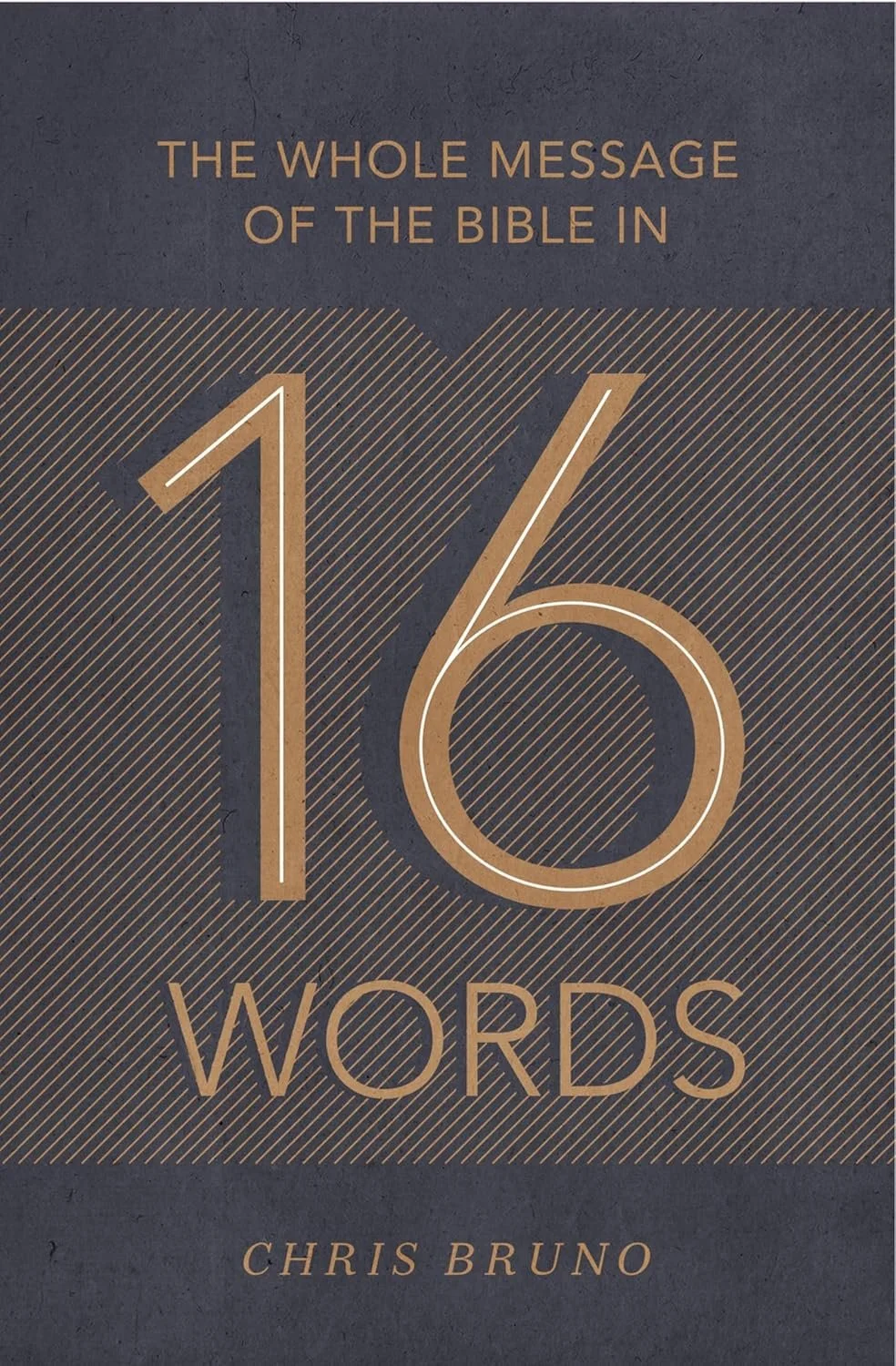
The Whole Message of the Bible in 16 Words
Chris Bruno
Crossway (2017). 160 pp.
One of the alarming trends in the church today is the stunning lack of biblical literacy. As many have noted, the number of people who can adequately summarize key aspects of biblical theology and Christian doctrine are decreasing with each passing year. Catechetical resources that aim to educate believers in the essentials of the faith are necessary to reverse this trend. Thankfully, Chris Bruno’s The Whole Message of the Bible in 16 Words aims specifically toward providing believers with a rich yet bite-sized intro to biblical theology. For Bruno, the goal of biblical theology is “to trace the progressive development of a theme or cluster of themes in the Bible” (p. 12). Using 16 words as a guide to navigating the biblical storyline, Bruno takes readers on a journey to understand the unfolding message of the Bible.
Bruno divides his work into three sections: Foundation, Frame, and Superstructure. In Foundation, he begins by exploring “The End” (eschatology), operating under an “already, not yet” framework. For Bruno, it is crucial to begin here because “the end shapes the whole story” (p. 20). Next, he describes “God” (theology proper), arguing that He is our “self-sufficient Creator and King, who judges sin and redeems his people” through Jesus (p. 31). With these fundamental underpinnings in tow, Bruno moves to part II, Frame, where he explores “Creation,” “Covenant,” and “Kingdom.” The Creator God has always dealt with humans through covenants, as evidenced by the covenants he initiated with major figures in the Old and New Testaments. All of these covenants find their final fulfillment in Jesus Christ. “God reigns as King in his sovereign rule over creation,” bringing salvation to sinners through Christ and ruling over the new creation (p. 59).
In part III, Superstructure, Bruno outlines several major concepts throughout Scripture that are essential in understanding the message of the Bible. Bruno explores “Temple,” “Messiah,” “Israel,” ”Land,” “Idols,” “Judgment,” “Exodus,” “Wisdom,” “Law,” “Spirit,” and “Mission.” Bruno masterfully gives brief biblical theologies of each of these themes, highlighting their inherently Christological nature. For example, in the chapter on “Judgment,” Bruno begins by highlighting the judgment on Adam and Eve and describes God’s judgment on the Israelites throughout the Old Testament. Finally, he describes how Jesus took God’s judgment upon himself for us on the cross. Suitably, the last theme is “Mission,” which Bruno describes as essential for furthering the glory of God and spreading the gospel to the nations. To conclude the book, Bruno encourages readers to dig into the Bible themselves and provides a helpful list of resources geared toward helping laypersons gain a better grasp on biblical theology.
Each chapter provides helpful key verses for readers to gain a sense of how the theme is operationalized in the Old and New Testaments. Bruno also includes summary statements that follow a similar pattern so that readers may better understand how each theme functions in Scripture. The book’s audience is laypersons who want an introduction to biblical theology. Bruno possesses the ability to condense rich biblical theology into short, punchy chapters that provide snapshots of biblical themes which laypersons will appreciate. Seasoned pastor theologians will also appreciate this volume, as Bruno demonstrates how to effectively communicate biblical theology to laypersons. What I appreciate about this volume is that it does not shy away from complexity, but rather untangles complex biblical themes that illuminate the message of the Bible. The volume will make an excellent Bible study for newcomers to the faith who need catechesis, while seasoned laypersons will appreciate the fresh perspective Bruno brings to understanding the message of the Bible.

Benjamin Espinoza is the Associate Vice President for Online Education and Assistant Professor of Practical Theology at Roberts Wesleyan College. He holds a PhD from Michigan State University. He is a member of the St. Peter Fellowship of the Center for Pastor Theologians.