The views expressed in this article are of the author only and do not necessarily represent those of the Center for Pastor Theologians.
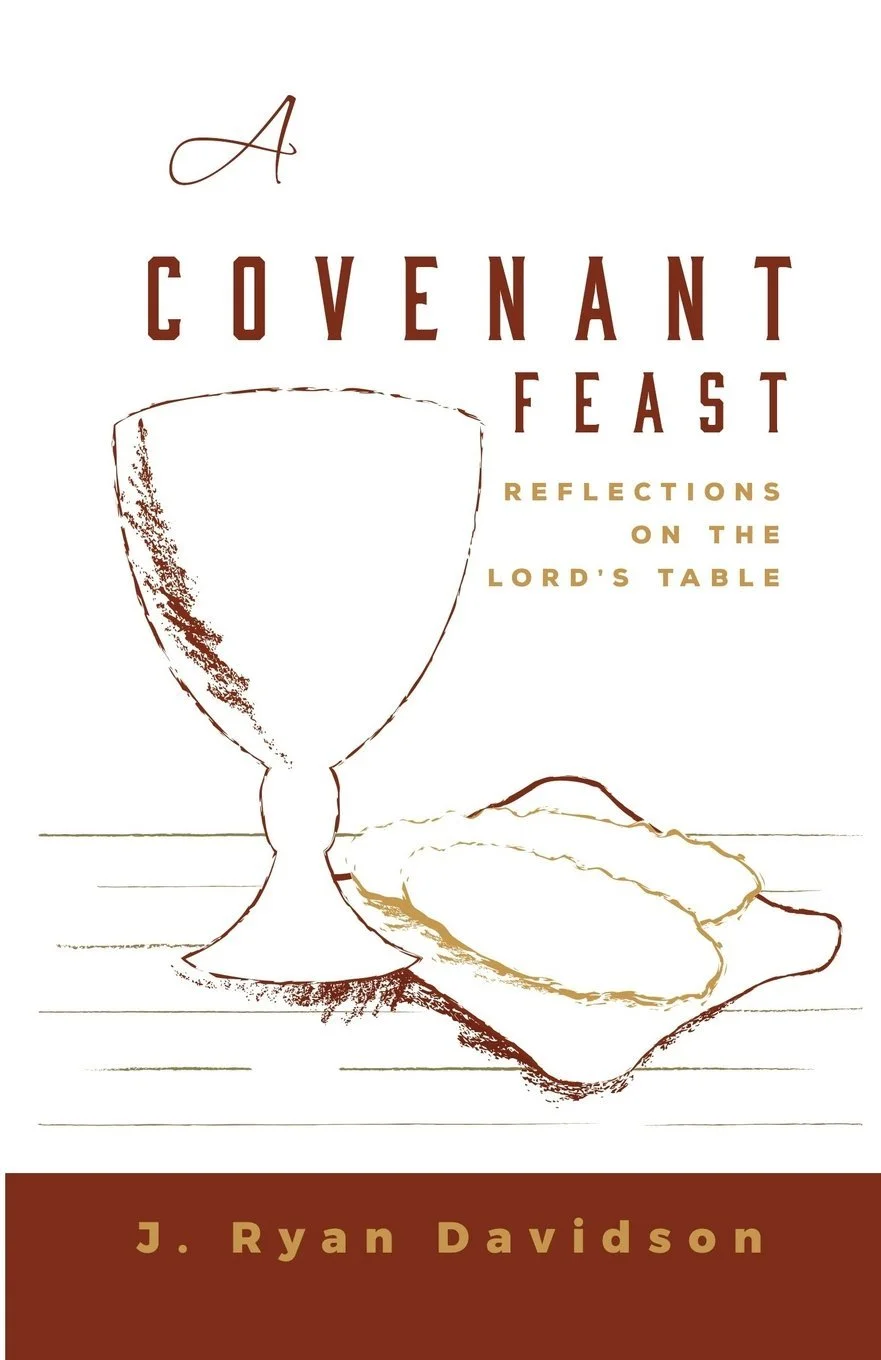
A Covenant Feast: Reflections on the Lord’s Table
J. Ryan Davidson
Ichthus (2016). 126 pp.
Perhaps it is my personal experience or the similar experiences of others in my little corner of Reformed evangelical Christianity, but I have observed a resurgence of interest in, and seriousness about, the sacraments in recent years. In an evangelical subculture where there are (hopefully apocryphal) stories of youth leaders serving the Holy Eucharist with Cool Ranch Doritos and Mountain Dew, this is certainly a welcome development.
In the summer of 2015, J. Ryan Davidson added to this resurgence with a series of sermons on the Lord’s Table at Grace Baptist Chapel in Hampton, Virginia. These sermons were subsequently edited and published in this short book.
The first chapter discusses the nature and meaning of the Lord’s Supper, the second explains what it means to fellowship with Jesus at the Table, including an argument and explanation for the real spiritual presence of Christ in the supper, and the final chapter instructs Christians how to prepare for and come to the Table.
In the first chapter Davidson argues that the central meaning of the Lord’s Table is as a covenant sign and so reassures us of our place in the new covenant. It is a visible sign that gives us a tangible experience of our union with Christ and reminds us of the coming feast in the new creation. In short, in the Lord’s Supper, God has given us a tangible reminder of his gracious promises to us.
Chapter two explains Davidson’s view of what exactly is happening when we come to the Table. “When we come to the Table in faith, through the Spirit, we are communing with the risen Christ” (p. 68). In a compelling explanation of what Paul means by participating in the body of Christ in 1 Cor 10:16, Davidson defends what is commonly called the “spiritual presence” view of the Lord’s Table against other prominent views.
In the last chapter, Davidson reflects on how we should approach the Lord’s Table. In light of his argument in the first two chapters, Davidson suggests that the best way to come to the Table is by looking to the gospel. In other words, if Communion is rooted in the new covenant and is a means of spiritual nourishment for members of that covenant, then we ought to prepare to come to the table by returning to the gospel that is the foundation for our participation in the meal. Therefore, when Paul talks about the dangers of coming to the Table in an unworthy manner in 1 Cor 11:27, and about not discerning the body in vs. 29, these are warnings against failing to see the connection between the Table and the good news. Davidson paraphrases Paul’s argument: “When you come to the Table and you partake without discerning the connection between sign and the thing signified, namely, the body of Christ [and his death for us], then you are eating the Lord’s Table in an unworthy manner” (p. 107).
As a happily sacramental Baptist, I find Davidson’s argument throughout the book compelling. Beyond this general observation, however, the book’s greatest strength may be the pastoral illustrations and applications that should drive us to the Table more regularly and expectantly. For example, in chapter two, Davidson drives home the truth that when we take Communion “we are changed and we are fed” (p. 79, emphasis original). He illustrates this truth with an anecdote from his own family. When he and his wife cut back the number of snacks they allowed their children to eat, they discovered they were eating more and better food at meal times. In the same way, we tend to look for fellowship with Jesus in many small ways while not giving sufficient attention to the meal he has given to us. It is my suspicion that many Christians do not realize the gift they are given when they come to the Table, and Davidson’s book provides many similar encouragements to come and partake in the Lord’s Supper.
While I have little substantive criticism of Davidson’s arguments in the book, it is clear that the book was originally intended as a sermon series. In fact, Davidson himself concedes in the introduction that the book still has a number of sermonic features (repetition, an overly conversational tone, etc.). While I’m not necessarily opposed to adopting sermons for use in print, a more thorough revision may have increased the clarity and usefulness of this book. Furthermore, since the book was originally a sermon series, those who are looking for sustained refutation of differing views on the nature of the Lord’s Supper may be disappointed. While Davidson does briefly interact with the Roman Catholic, Lutheran, and memorialist/Zwinglian views, he does not spend much time explaining the strengths and weaknesses of these competing positions. Having said that, however, I would still recommend this book to any pastor or serious Christian who wants a better understanding of the nature and benefits of the Lord’s Supper. Sympathetic readers will be encouraged, and I suspect that those who have other views will be, if not persuaded to change their minds, more eager and expectant when they come to the Table after reading Davidson’s book.

Chris Bruno (PhD, Wheaton College) is the President of Oahu Theological Seminary where he also serves as Professor of New Testament and Biblical Theology. He has written and contributed to many books, most recently The Divine Christology of the Apostle Paul (IVP, 2024, with John J. R. Lee and Thomas R. Schreiner). He is a member of the St. John Fellowship of the Center for Pastor Theologians.