The views expressed in this article are of the author only and do not necessarily represent those of the Center for Pastor Theologians.
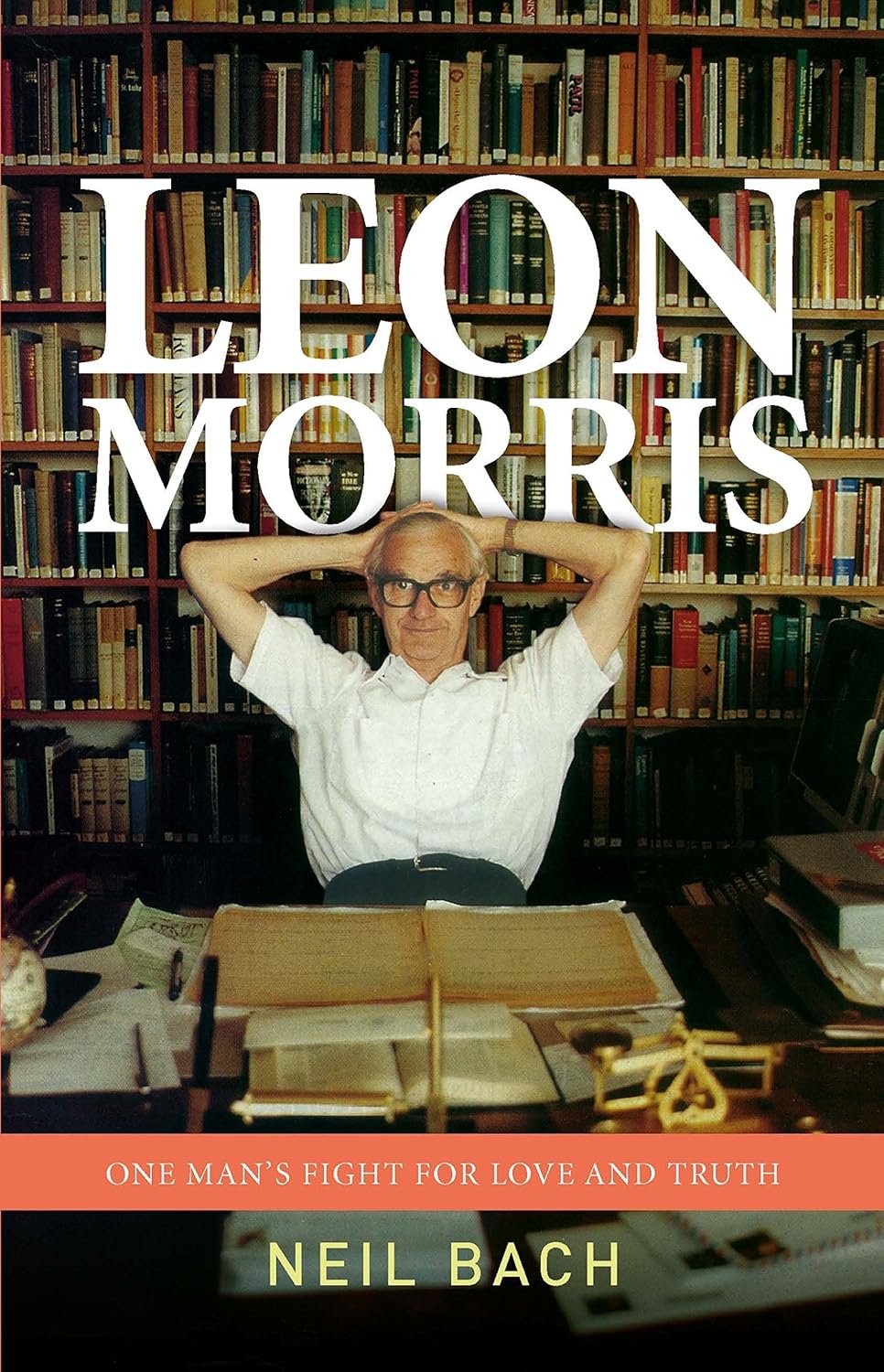
Leon Morris: One Man’s Fight for Love and Truth
Neil Bach
Paternoster (2015). 318 pp.
I resonate deeply with the vision of the Center for Pastor Theologians and the church’s need for the “pastor theologian.” But what about the “pastor exegete” and the church’s need for the ministry of the word? This question is not an attempt to create a false dichotomy. In the modern academy, however—the domain in which pastors are formed—theology and exegesis (or biblical studies) have been divorced for a couple centuries. They may have an amicable custody agreement for a shared ministry to the children of God, but the academic formation in these two domains is quite distinct. Classic examples of the pastor theologian like Augustine and Calvin, who wrote robust works of theology alongside richly exegetical commentaries, are from a bygone era. So, my formal training in NT, a robustly biblical studies domain, can at times make me feel a small dissonance when I think of myself as a pastor “theologian.”
For that reason, I found Neil Bach’s biography on the Australian Anglican, Leon Morris (1914–2006), helpful and encouraging. Written with an appreciative spirit and in a chronicling way, Bach offers a portrait of a man who is a pastor theologian of the “exegete” strain. While Morris is well known for his theological works, especially on the atonement, he clearly wrote as a biblical theologian, the biblical studies side of theology. Even more, his most prominent contributions, the ones I was most influenced by, were his biblical commentaries. His commentary on the Gospel of John, for example, was masterful in its balance of textual analyses, historical realities, and confessional truths. This type of “pastor theologian” is a worthy testimony to share with the church and promote within the Center for Pastor Theologians.
In Part 1, Bach shows how Morris’s origins from a mining town helped prepare him to mine the Scriptures in his future ministry. After recognizing his intellectual gifts, Morris’s family made several sacrifices to provide him with an education. Morris responded “with a drive and commitment” (p. 12) that matched their commitment to him, a drive and commitment that would extend throughout his life and ministry career. After formal training in theology and ordination in the Anglican Church, Morris spent time in the wilderness of outback Australia. This mission work and parish life formed Morris as a pastor theologian. As he would later explain, it formed him as a servant of Christ. This season also shaped Morris to see the connection between God’s word and God’s people. As Bach explains, “For Leon, plumbing the depths of God involved more than plumbing the depths of the Bible. It involved witnessing God’s truth transmitted into the lives of ordinary people so they might live strengthened and purposeful lives for God. It means serving alongside them as a fellow Christian traveler” (p. 32).
In Parts 2–4, Bach details Morris’s move to Ridley College in Melbourne, where he would study, write, and lead (on and off) for the majority of his career. It was at Ridley, in the classroom, meeting room, and chapel, where Morris expressed well the virtues and traits of a pastor theologian. And his work was driven by a desire to communicate God’s truth to the church. As his scholarly reputation grew, he was regularly invited to give lectures in the academy and the church. He also was also quite prolific as an author of biblical and theological works. Morris’s work, study, and relationships were such that make for a model pastor theologian. His public recognition as a scholar never distracted him from the office of the pastor theologian, evidenced by the ways he and his wife regularly met with and served people of every stripe, as well as his willingness to write discipleship manuals for regular Christians and their Bible studies (p. 80). He may have been traveling the world as a gifted lecturer offered major book contracts, but he never lost his “drive and commitment” to serve his local diocese in Melbourne.
In Parts 5–6, Bach chronicles Morris’s life and work in retirement, during which he continued his ministry of speaking and writing. Bach summarizes the retired Morris in this way: “His top priority in this new phase of ministry was full-time writing, and he worked at full speed for some eleven years before any significant change of pace. Leon produced a further twenty books in this period” (p. 191). Bach goes into great detail outlining Morris’s lecture tours and significant writing projects. The goal seems to be to show the passion Morris had to present the major truths of God’s word to the regular Christian. And this he did with excellence and conviction. Morris and his wife lived humbly and generously and reflected true discipleship in public and private. Leon Morris died in 2006, at the age of ninety-two.
Bach’s biography presents such a chronicled outline of the life and, specifically, the career of Leon Morris, albeit with personal anecdotes along the way, that in several places the man gets lost in his works. As much as the details about the audiences at his lectures or his travel itineraries were interesting and showed glimpses of his work and, at times, his person, as a reader I was often left craving a more integrated and complex portrait of this servant of the church and pastor theologian. To be fair to Bach, such a portrait seems to match the kind of man Morris was. It was clear that he was methodical, disciplined, and convinced that faithful ministry required hard work. Bach gave the impression that on the surface of a compassionate and serving heart was a man who was nerdy, happier with books than people, and slightly awkward in personal interactions. An example of his regimented life was his well-known and regular practice of stopping whatever he was doing every fifty-five minutes to take a break, usually involving a five-minute walk. As much as Morris was personable and hospitable, Bach clearly shows him to be more introverted and comfortably alone. Morris did not mind the work in his study. Such a portrait might look like the common traits of a professor, but for Morris it was intentionally expressed and lived out in overtly pastoral ways. And fitting a pastor theologian on the larger scale, Morris’s thinking and writing was also a part of his pastoral ministry for the global church, the author of this review included.
Bach’s biography of Leon Morris should serve as another testimony that the church needs the pastor theologian, including those of the exegete strain. Morris’s life and ministry offer those who align with the vision of the Center of Pastor Theologians at least two exhortations that are worth heeding. First, Morris magnifies the importance of rightly interpreting and teaching the word of God to the church. He was clearly driven and committed to be a man “who correctly handles the word of truth” (2 Tim 2:15), and the church needs pastor theologians who will feed Christ’s sheep (John 21:15–17). Second, Morris reminds the church that the life of the mind must be a life of service. Morris clearly received his gifts, education, and proclivity for biblical interpretation and theology as his ministry for the church. I know I speak for many when I express my gratitude for Morris’s skillful interpretation of Scripture, and his ability to synthesize biblical themes and concepts for the church. Leon Morris stands in a long line of pastor theologians to whom we are indebted and from whom we have much to learn.

Mickey Klink (PhD, University of St. Andrews) is the Senior Pastor of Hope Evangelical Free Church in Roscoe, IL. He is a Senior Fellow of the Center for Pastor Theologians.