The views expressed in this article are of the author only and do not necessarily represent those of the Center for Pastor Theologians.
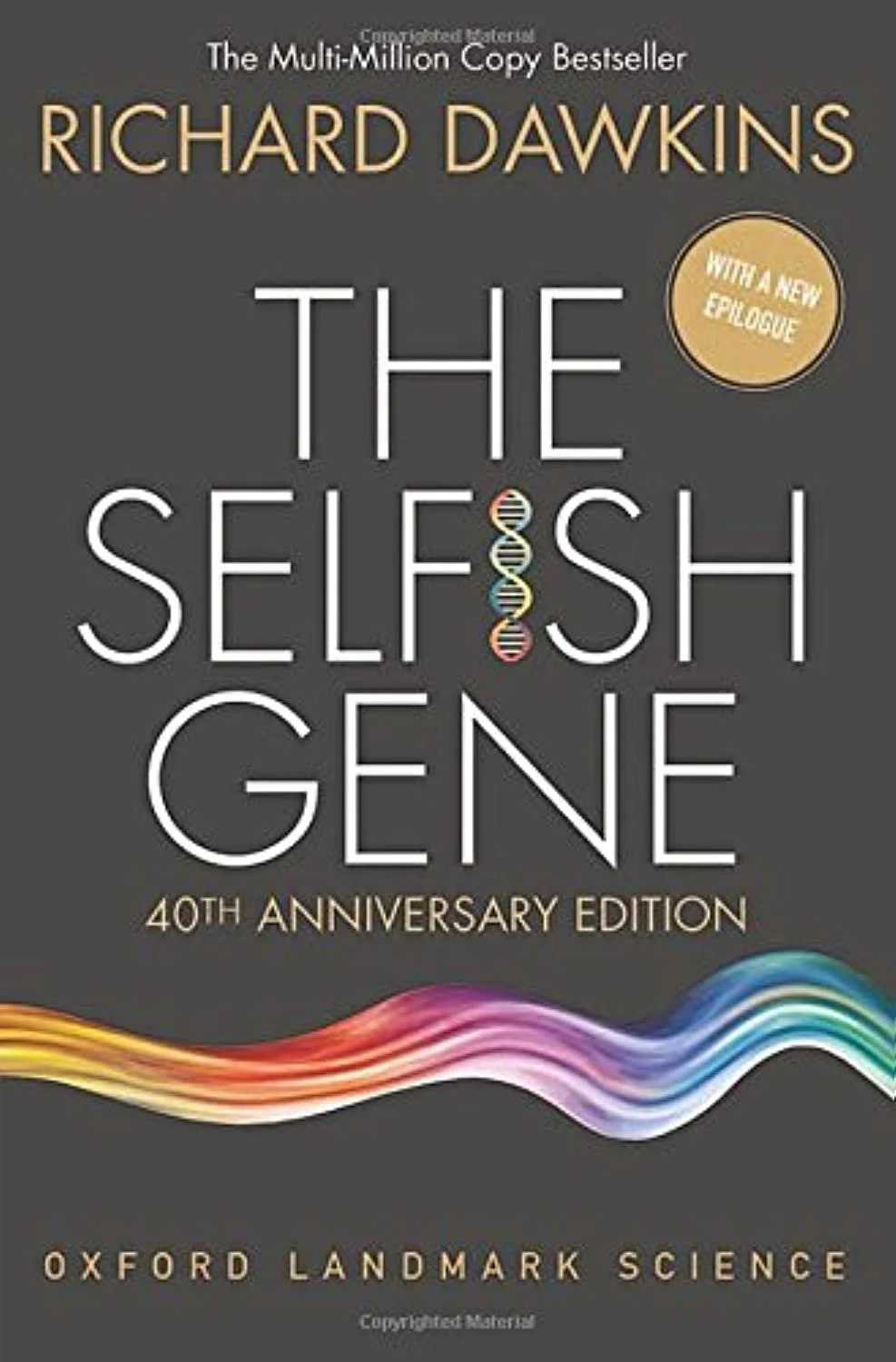
The Selfish Gene, 40th Anniversary Edition
Richard Dawkins
Oxford University Press (2016). 496 pp.
As a general rule, any book that is still being printed after forty years, that has sold more than a million copies, and that has been translated into twenty-five languages, is probably a book worth reading. Richard Dawkins’ book, The Selfish Gene, does not disappoint. Published in 1976, this is the book that first propelled Dawkins to fame (and presumably fortune). The book is now in its third impression and continues to hold a place of influence in discussions related to science and evolution. And that’s saying something for a book on science—a field that changes rapidly. Dawkins is especially well known in Christian circles for his book, The God Delusion, and his corresponding hostility toward the “mental illness” of faith. Those who have read God Delusion and have been unimpressed by Dawkins’ grasp of philosophy and metaphysics may have wrongly written him off as a second-tier thinker. God Delusion is, I suspect, Dawkins at his worst. I’ve not read enough of Dawkins’ corpus to say The Selfish Gene is Dawkins at his best; but from my limited vantage point, the book is certainly justified in the praise it has received. The book (like most good books) is written in a way that makes it fascinating and intelligible to non-specialists, while yet maintaining the sort of intellectual and scholarly rigor necessary to influ ence the specialists in the guild. This latest edition has a new introduction, epilogue, and the endnotes have been likewise updated.
Dawkins’ main thesis is the idea that the process of evolution works most fundamentally at the genetic level, rather than the species level. Or to say it again, the key to understanding evolutionary biology is not to look at how “survival of the fittest” intersects with species, but rather how it intersects with genes. Genes (also referred to by Dawkins as “replicators”) do whatever they can to reproduce themselves; this is their mindless and sole aim (hence they are “selfish”). According to Dawkins, the various species that have existed, and that currently exist, are merely vehicles by which genes replicate and multiply themselves. Thus genes, not species, are the “fundamental units” of life in the universe. An extended quote near the conclusion of the book captures well Dawkins’ central idea: “At some point in the evolution of life on our earth, this ganging up of mutually compatible replicators began to be formalized in the creation of discrete vehicles—cells and, later, many-celled bodies.…This packaging of living material into discrete vehicles became such a salient and dominant feature that, when biologists arrived on the scene and started asking questions about life, their questions were mostly about vehicles—individual organisms. The individual organism came first in the biologist’s consciousness, while the replicators—now knows as genes—were seen as part of the machinery used by individual organisms. It requires a deliberate mental effort to turn biology the right way up again, and remind ourselves that the replicators come first, in importance as well as history” (p. 343). All of which is to say that genes, not species, are the real drivers in evolution.
The main body of the book is Dawkins’ effort to show how his central idea has explanatory force in the field of biology. The existence of male and female, the asymmetrical relation between the sexes, sexual reproduction, altruism, and beyond, are all explained through Dawkins central idea of the selfish gene.
Yet Dawkins, even as a biologist, is unconvinced that genetics can explain everything. In Chapter 11 Dawkins extends his insight regarding genes to a second type of non-material replicator he calls “memes.” (Yes, Dawkins is the guy that invented the term). Memes are cultural replicators such as tunes, ideas, catch-phrases, clothes fashions, etc. that develop currency and have staying power in a given culture. “Just as genes propagate themselves in the gene pool by leaping from body to body via sperm and eggs, so memes propagate themselves in the meme pool by leaping from brain to brain via a process which, in the broad sense, can be called imitation” (p. 249). Human beings, more so than any other species, are uniquely competent in creating memes. Memes might correspond to reality (such as a new scientific discovery), or can be mere legends that have no ultimate connection to reality. This is an insightful chapter that merits a close reading, and was later developed into Dawkins second book, The Extended Phenotype (1982).
Those interested in religion will note that throughout his work Dawkins presumes that his central insight explains (and explains away) the religiosity of human beings. The selfishness of genes gave the universe humans beings, and human beings, through memetic evolution, gave themselves the gods. But it is not clear (either here, or his in God Delusion) how the mere idea of evolution (genetic or memetic) inherently disqualifies, at the outset, the idea of God. This is where Dawkins stumbles badly and insists that genetic or memetic explanations ipso facto contradict metaphysical claims—as though explaining how the heart pumps blood necessarily invalidates the reality of the soul. The concept of evolution is not without its challenges to certain aspects of Christian theology. But biological evolution, as an explanation for how life came about on earth, or memetic evolution, as an explanation for how God made humanity aware of his presence, is not at all incompatible with Christian theism. Dawkins’ central insight that evolution happens at a genetic level, rather than a species level (or culturally at a memetic level), is neither here nor there with respect to the Christian faith. For the Christian evolutionist or sociologist, Dawkins has, in spite of himself, only shown us a clearer picture of God’s handiwork.
Unlike Dawkins’ God Delusion, The Selfish Gene is not written with the primary purpose of dismantling faith. He takes a few pot shots along the way, but for the most part he has his sights pointed in other directions. Those interested in biology, genetics, memes, evolution—and more ultimately, the handiwork of God—will find much to enjoy in Dawkins book.

Gerald Hiestand (PhD, University of Reading) is the Co-Founder and Board Chair of the Center for Pastor Theologians. He has over 15 years of pastoral ministry experience and currently serves as the Senior Pastor of Calvary Memorial Church in Oak Park, IL. He is the editor and author/co-author of several books, including The Pastor Theologian: Resurrecting an Ancient Vision. He is also a founding member of the St. Anselm Fellowship of the CPT.