The views expressed in this article are of the author only and do not necessarily represent those of the Center for Pastor Theologians.
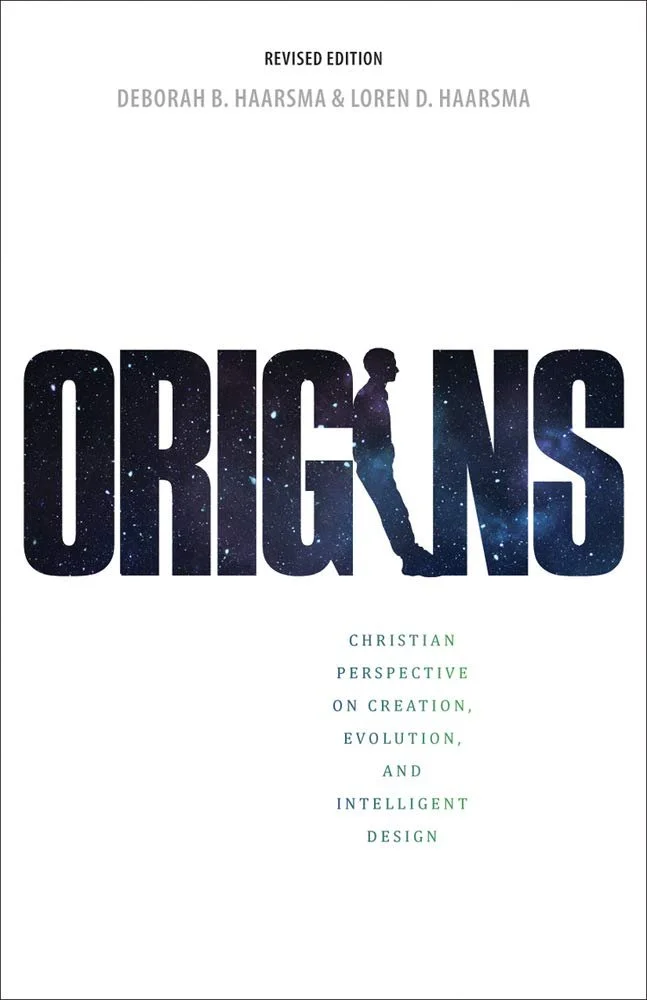
Origins: Christian Perspectives on Creation, Evolution, and Intelligent Design
Deborah B. Haarsma and Loren D. Haarsma
Faith Alive Christian Resources (2011). 315 pp.
A shift appears to be taking place in certain circles of contemporary American evangelicalism. It seems that more and more self-identified conservative Christians are willing to espouse and affirm the narrative of human and cosmic origins coming out of modern science. This transition is far from complete –– and whether it will continue remains to be seen. And while some view this shift as welcome or overdue, others still look askance at the scientific community. Still others withhold judgment, perhaps defaulting to a traditional or fundamentalist position, not as a function of staunch and stubborn conviction, but rather ignorance of the finer points and various positions within Christian debate on origins. Deborah and Loren Haarsma’s Origins targets and seeks to help this third group of Christians most directly.
This book serves as an introduction to the issues at stake and the arguments employed by various positions in the Christian debate on human and cosmic origins. In their own words, the authors identify the “purpose of this book [as] to lay out a wider variety of options and to examine what both the Bible and the natural world can teach us about these options” (p. 14). Both of the authors are Christians trained in scientific fields of astronomy and physics, respectively. In addition to their scientific expertise, the Haarsmas demonstrate an awareness and even a sophisticated understanding of Christian theology and biblical interpretation.
The opening chapters provide a helpful foundation for later discussion, outlining the theological and philosophical starting points for a Christian view of science and its relationship to special revelation in the Bible, as well as God’s relationship to the “natural order” of the world. These chapters include extended discussion of such simple but theologically loaded premises as “A scientific explanation of a natural event does not replace God, and it does not mean that God is absent” (p. 46) or, “Because God is the author of both revelations, we believe that nature and Scripture do not conflict with each other” (p. 73).
Having laid this groundwork, the core of Haarsmas’ book outlines different viewpoints on origins. Regarding the text of Genesis, the authors helpful divide perspectives into “concordist” and “non-concordist” views. In these chapters (and throughout the book), the Haarsmas are especially critical of views and approaches that they find unconvincing scientifically, including almost all “Creation Science” perspectives and theories. This is perhaps not entirely surprising given their own professional backgrounds, but it is something to be aware of before purchasing or reading the book. Those looking for an enthusiastic reading and compelling defense of Young Earth Creationism will not find it here. While the authors do acknowledge some of the strengths of these positions, they do not hesitate to directly (though charitably) point out what they see to be the scientific and philosophical/theological shortcomings of certain views.
The later chapters in Origins deal more directly with the theory of evo lution and with human origins in particular, wherein the authors catalogue significant scientific evidence in support of evolution. In these chapters the Haarsmas distinguish between macro-evolution and micro-evolution and various Christian views on both. There is also a chapter devoted to the Intelligent Design Movement, which does not receive a favorable appraisal from our authors, including direct criticism of Answers In Genesis (225). Finally, the book includes sections on theological problems associated with the questions of cosmic and human origins, including an entire chapter devoted to Adam and Eve.
Each chapter concludes with discussion questions, as well as suggestions for further reading. This makes this book especially versatile as a primer on these topics or as a book to be read together and discussed in churches and small groups.
In sum, Origins may serve as an excellent resource for pastors who 1) are not familiar with the nuances of the issues and debates surrounding evolution and Christianity’s relationship to science, 2) would like to grow in their ability to discuss and speak charitably about these issues, or 3) would like to be able to better connect with Christians in their congregations who have training in or work in scientific fields. The writing style of this book is intentionally accessible, thus making this an excellent resource that pastors can recommend or lend to their congregants who are distressed or confused by this debate. For the initiated and those who have already perhaps read several books on this topic, Origins perhaps will be less helpful, though many of the illustrations and discussions may offer fresh language to articulate and understand these discussions. At the very least, becoming aware of and acquainted with this book is well worth the effort for any pastor theologian who aspires to shepherd his or her congregation well with regard to the complex and fascinating topic of human and cosmic origins.

Zachary Wagner (DPhil, University of Oxford) formerly served as the Editorial Director of the Center for Pastor Theologians. He is the author of Non-Toxic Masculinity: Recovering Healthy Male Sexuality (IVP, 2023). He is a member of the St. Basil Fellowship of the Center for Pastor Theologians.