The views expressed in this article are of the author only and do not necessarily represent those of the Center for Pastor Theologians.
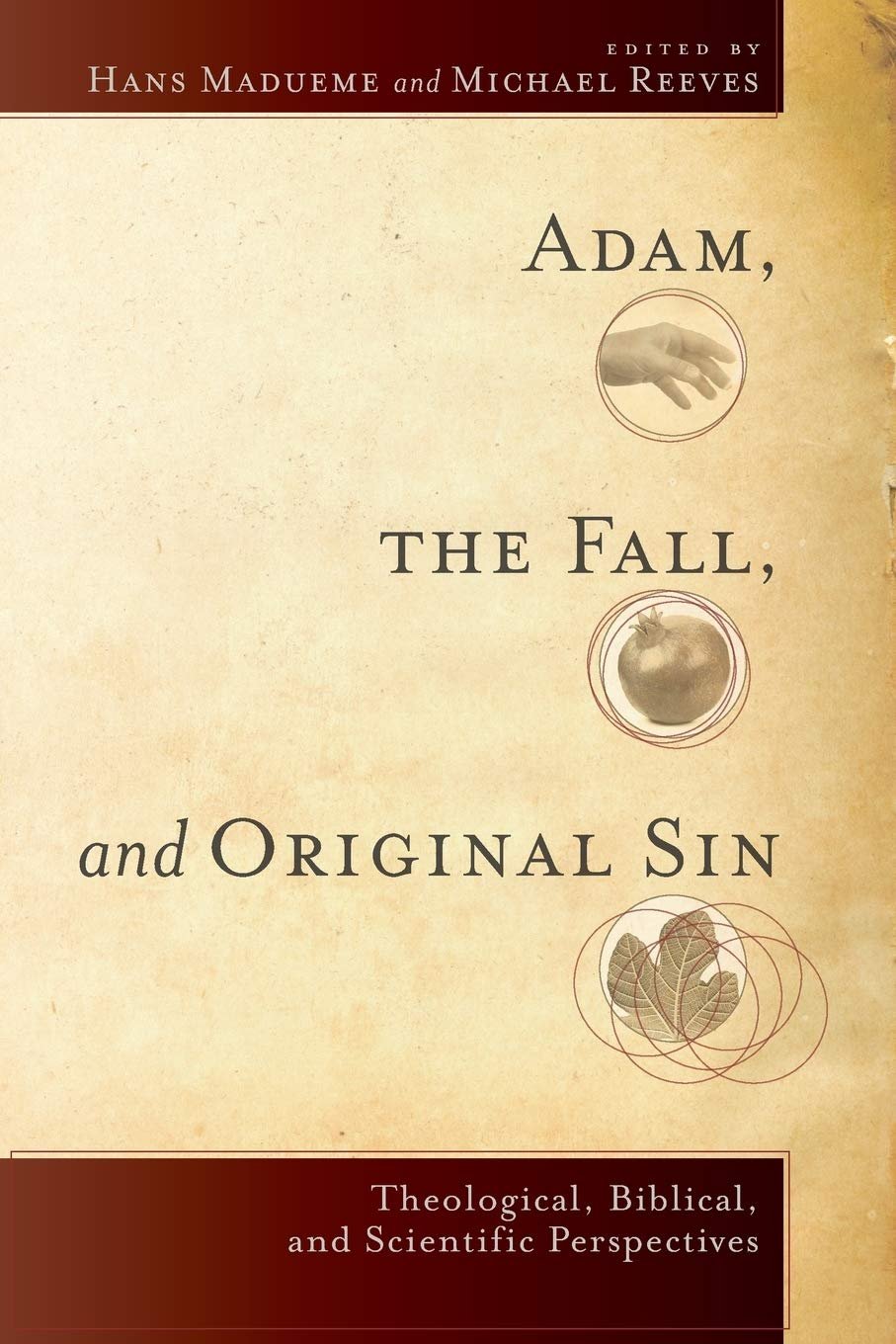
Adam, the Fall, and Original Sin: Theological, Biblical, and Scientific Perspectives
Hans Madueme and Michael Reeves, eds.
Baker Academic (2014). 339 pp.
Can Christian theology survive the loss of an historical Adam? Does Christian doctrine—and particularly the Gospel of a Savior who came to die for sinners—require an original fall? Questions like these have been explored in recent works by growing list of scholars. Increasingly, they are coming onto the radar of pastors and theologically-minded laypersons. In this edited collection of essays that range from the biblical to the historical, theological and even pastoral, editors Hans Madueme and Michael Reeves have assembled an interdisciplinary chorus of voices to make the case that an historical Adam and original sin “are essential, irremovable, relevant, and credible elements” of the Christian faith (p. 323).
Many evangelicals today are losing faith in such classic doctrines and accommodating too quickly. Yet these authors remind us that Adam and the fall “do not float free in Scripture like rootless, atomistic, independent ideas” (p. ix). They liken Adam and original sin to “threads” which run throughout the “cloth of faith,” and warn that there will be repercussions if we remove them. Pull on one “and the others follow” (p. 210).
This is a well-written book that consists of four sections and fifteen different chapters. C. John Collins kicks things off by arguing that we should read Genesis 1–11 as a collective unity. The whole OT presupposes the historical significance of Adam and Eve “as the fountainhead of humanity and as the doorway by which sin came into the world” (p. 5). Even though Genesis utilizes figurative elements and literary conventions—which should make us wary of being too literalistic—Collins is nevertheless convinced that Genesis aims to tell us the true story of origins. He argues that biblical authors will often communicate their point of view by “indirect and laconic means,” emphasizing what Collins describes as “showing” (displaying the heart by action and speech) over “telling” (explicitly evaluating the characters and actions) (pp. 18–19).
Robert Yarbrough follows with a chapter that serves up an excellent analysis of all of the explicit references to Adam in the NT. He gives special attention to Romans 5, which he sees as a climactic passage in this epistle that “stands at the theological crossroads of the entire New Testament” (p. 43). Yarbrough points out that Paul refers to Adam no less than a dozen times (either by name or indirect reference). Furthermore, Paul’s soteriology, Christology, theological anthropology and hamartiology all come together in these verses—and none of these are intelligible without Adam in historical existence (p. 43).
Chapter 3 offers another interesting discussion penned by an academic paleontologist under the pseudonym, “William Stone.” Stone accepts the evidence put forth by modern paleoanthropology, which is often regarded as a sort of “smoking gun” against Adam’s historicity (p. 54). Yet he also affirms that humankind is connected by a line of ancestry to a single pair of specially created humans. After analyzing data from the fossil record, Stone suggests that Adam could be placed at the root of the Homo erectus/ ergaster to Homo Sapiens lineage around 1.8 million years ago (p. 78).
The five essays in Part 2, “Original Sin in History,” survey this doc trine in the Patristic era and in several later theological traditions. Peter Sanlon argues against the notion that Augustine could have invented such a major doctrine like original sin (p. 95). Instead, Sanlon demonstrates how Augustine took care to show, and later councils agreed, that he simply stood in line with earlier interpreters (p. 107). The doctrine of original sin did undergo some minor changes with Luther (p. 111), but both Lutheran and Reformed traditions have been “unanimous” in their belief that depravity must be rooted in a fall and not in creation. All human beings are born with a propensity to sin, and they will inevitably act upon it (pp. 145–46).
Readers may find Thomas McCall’s chapter on Wesleyan Theology particularly enlightening. Despite widespread confusion, McCall reminds readers that Wesley himself actually did defend the federal headship view (p. 148), and along with other early Methodists he also held strictly to Adam and Eve as real historical persons. McCall traces how later Wesleyans, though, progressively distanced themselves from belief in original guilt. In McCall’s thinking, this leaves Wesleyans who want to retain the notion of original guilt with a couple of options. One would require the adoption of a Molinist account of providence, while the other is McCall’s own intriguing proposal. He suggests that we could say that when people sin individually, they essentially ratify what Adam did originally. This renders them guilty for both their own actions and for their inherited corruption. In other words, by ratifying Adam’s sin, “we accept our corruption and are guilty for our state” (pp. 164–65).
Carl Trueman closes this section with an outstanding essay that traces progressive moves away from original sin in modern theology. He surveys six major mainline theologians: Schleiermacher, Rauschenbusch, Barth, Bultmann, Niebuhr and Pannenburg. All of these influential thinkers repudiated any notion that humanity stands guilty because of an imputed alien guilt. As for the historicity of Adam and the fall, they are either indifferent or unconvinced about it. Yet Trueman picks up the inevitable conclusion of such a loss and poses an excellent question: “What does it mean to say we are responsible as individuals for our sinful state when sin is actually a structural part of creation?” (p. 185).
The third section of the book may be the strongest, and this is where the siren voices of Madueme and Reeves are at their loudest. They insist that we need an historical, originating sin, and go on to highlight several doctrinal areas that will “invariably suffer theological fallout” without it. These include soteriology (Does sin gets trivialized as only a functional problem?), the incarnation (Why did the Son have to take on every aspect of our humanity?), the atonement (Did Christ actually defeat sin’s power in his own death and remake humanity in his resurrection?), and theodicy (Should we believe that God has created an inherently fallen world?) (p. 210).
In his stand-alone essay, Madueme is both stirring and thought-provoking. On what grounds, he asks, can extrabiblical, natural science change or overturn a doctrine that is authorized by God’s Word? As emerging scientific developments continue to create conflicts with the doctrine of original sin—should Adam and the fall be held “hostage to the fortunes of science” (p. 237)? Madueme warns that theologians often end up creating more problems when they try to navigate this conflict by making accommodations to the current scientific consensus. What happens, he wisely asks, when the science moves on? “Theology married to science in one generation will be widowed in the next” (p. 240). In response, Madueme proposes that we protect particular major doctrines that are “theologically certain,” and he then suggests several criteria for when we might raise a doctrinal conviction to such a level. Is it clearly attested in Scripture? Is it central rather than peripheral to the redemptive-historical narrative? Has it been taught universally in the church and confirmed supernaturally by the internal witness of the Holy Spirit (p. 244)? Based on such criteria, Madueme classifies the doctrine of the fall as a theologically certain doctrine. It is like “an essential thread” that ties together key doctrines in a seamless garment of systematic theology. “Pull it loose,” he warns, “and the whole thing unravels” (p. 246).
As with any edited volume, the essays here vary widely in style, depth, and even scholarly expertise. Some are more interesting than others. From a sheer organizational standpoint, it might have been better to group the biblical scholars together, then the theologians, the historians, etc. But the work is still quite readable and most of the essays are highly engaging. Who will benefit most from this book? Certainly scholars will want to familiarize themselves with its arguments. But there is also substantial theological value here for theology students, seminarians, pastors, and even theologically-inclined laypersons. If nothing more, Madueme and Reeves have done a service to the church by encouraging all of us to pause and carefully consider the ramifications before jettisoning or accommodating any doctrine too quickly

Jason A. Nicholls (PhD, University of Marquette) is the Lead Pastor at Redeemer Missionary Church in South Bend, Indiana. He is a member of the St. John Fellowship of the Center for Pastor Theologians.