The views expressed in this article are of the author only and do not necessarily represent those of the Center for Pastor Theologians.
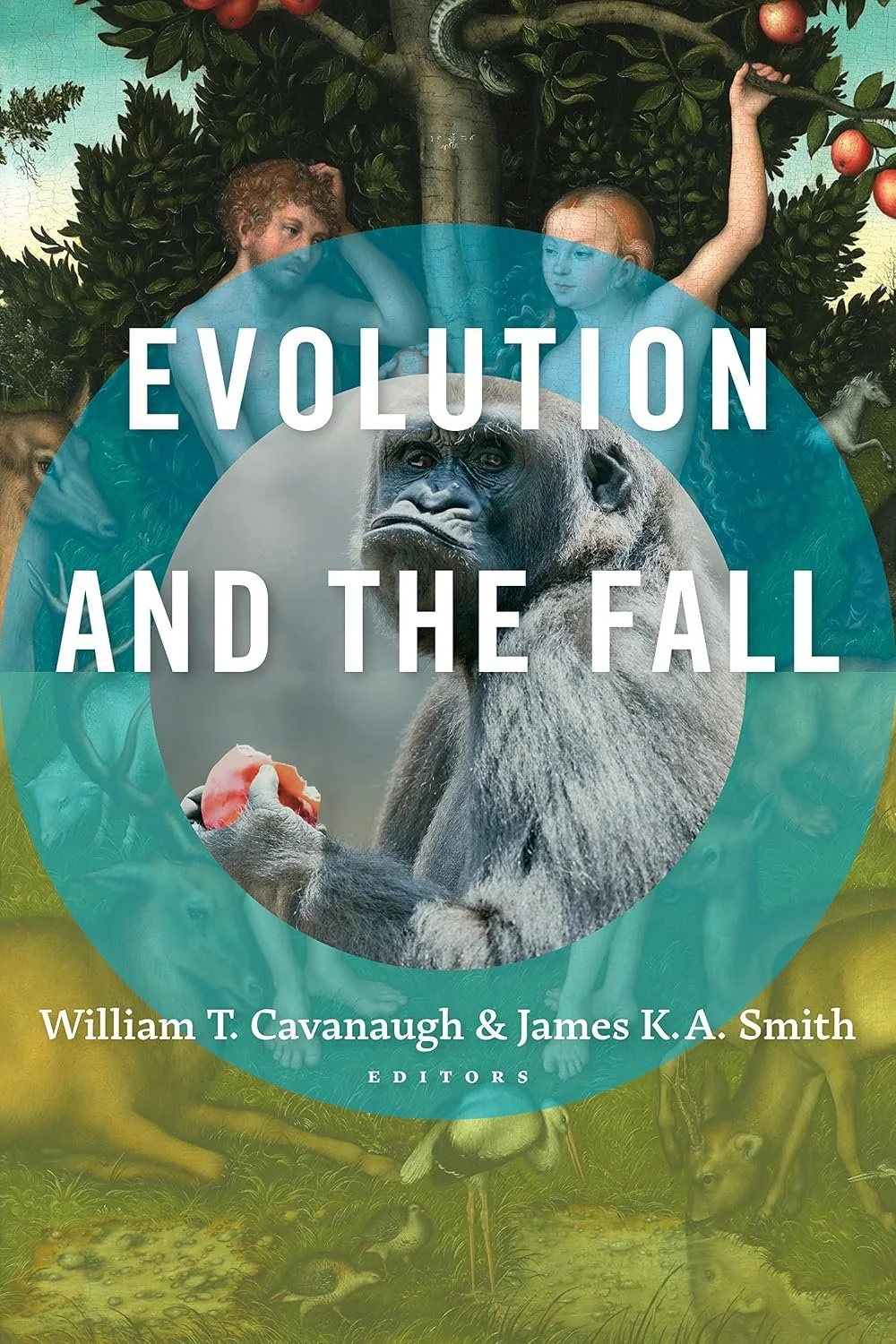
Evolution and the Fall
William T. Cavanaugh and James K.A. Smith, eds.
Eerdmans (2017). 231 pp.
Scientific theories are not set in stone. Scientists continually discover new evidence, shift paradigms, and propose new theories. Nevertheless, the broad scientific consensus about the origin of human beings points toward the gradual evolution of human beings from primates, not an instantaneous, special creation of two human beings from whom the entire human race descended. On the surface, this scientific consensus seems to undermine the biblical accounts of human origins and the fall of the human race into sin. Christians react to this apparent contradiction in a number of ways. Some adopt a “warfare” mentality that sees science and faith as enemies and make no attempt to reconcile them. Others adopt concordist models that either reinterpret scientific theories to fit Scripture, or reinterpret Scripture to fit scientific theories. Still others understand science and faith as non-overlapping magesteria, believing both subjects speak to truth differently and should be pursued separately.
In contrast to these approaches, Evolution and the Fall explores human origins by retaining the core convictions of Christianity and taking seriously the modern scientific consensus about human origins. In other words, these essays assume that the traditional Christian understanding of an original good creation that fell into sin is true, that the scientific consensus about human beings evolving from primates is true as well, and that these two truths should and can fit with one another. These ten essays arose from a three-year project sponsored by the Colossian Forum on Faith, Science, and Culture, which gathered an ecumenical and multidisciplinary team of scholars to pursue a communal research program on how to understand the relationship between evolution, the Fall, and original sin. This group included those in the fields of biology, theology, history, Scripture, philosophy, and politics. Meeting for a week each year, these scholars not only shared the fruit of their research, but worshipped and prayed together, seeking to produce a book that would purposely arise from this embodied, Christian collaboration.
Evolution and the Fall is divided into four parts. Part I introduces the questions present in this discussion. Biologist Darrell Falk provides a comprehensive overview of the current archeological and genetic evi dence for evolution. He then emphasizes why Christians need to take this evidence seriously and pushes back against the rush to understand this information from an anti-theist perspective. Catholic theologian Celia Deane-Drummond brings together evolutionary biology and the doctrine of original sin, demonstrating how each impacts the other, and proposing some new ways to move the conversation surrounding these issues forward. Reformed philosopher James K. A. Smith then explains what is at stake in the doctrine of the Fall and proposes a way to understand the Fall that he believes is consistent with evolution.
Part II of the book focuses on Scripture. It begins with an essay from Old Testament scholar Richard Middleton on the how to read Genesis in light of evolutionary theory. Middleton is careful not to read evolution back into the text, but instead explores how a faithful understanding of Genesis could be consistent with evolution. New Testament scholar Joel Green then examines the New Testament’s contribution to the doctrine of original sin, suggesting that both Paul and James are compatible with evolutionary theory. Catholic theologian Aaron Riches closes this section by arguing that Adam must be a concrete person, but that he should primarily be understood in light of the new Adam, Jesus Christ.
Parts III and IV consider some cultural implications of this discussion and then propose some possible ways forward. Ethicist Brent Waters reflects on the Fall as a sense that human life is not as it should be, and as a critique on attempts to improve life through our own efforts. Theologian Norman Wirzba demonstrates how a Christian understanding of creation challenges competing secular understandings, and why Christians must be careful not to reduce the conversation to a debate about scientific theories. Catholic theologian William Cavanaugh proposes that the decline of the Fall narrative happened in our culture for political reasons, not scientific ones, and explores the implications of this for the rapprochement of faith and science. Historian Peter Harrison closes the book with some suggestions on how to think through apparent conflicts between Christian faith and science, drawing primarily on Augustine.
With such an eclectic collection of essays, Evolution and the Fall should appeal to a wide audience of Christians who are struggling to understand their faith in light of evolution, whether they are seeking insight theologically, biblically, scientifically, or culturally. As I read, I thought of people in my congregation who would benefit from one essay or another, although I can think of very few people who would want or need to read the entire book. The intended audience is also important to consider with a book like this. While some essays defend the truth of evolution more than others, for the most part the authors assume it to be true, and therefore this book would not be helpful for those who reject evolution as a possibility. These essays certainly advance the conversation, however, and demonstrate the possibility of bringing together evolution with the doctrine of original sin. The authors typically offer tentative conclusions, seeking to spark conversation and reflection more than provide definitive answers. No one will agree with every proposal, but all who read will understand what’s at stake in the discussion, and how important it is to work toward understanding.

Gary L. Shultz, Jr. (PhD, Southern Baptist Theological Seminary) is the Associate Professor of Theology and Editor of Baptist University Press at Baptist University of Florida. He is a Senior Fellow of the Center for Pastor Theologians.