The views expressed in this article are of the author only and do not necessarily represent those of the Center for Pastor Theologians.
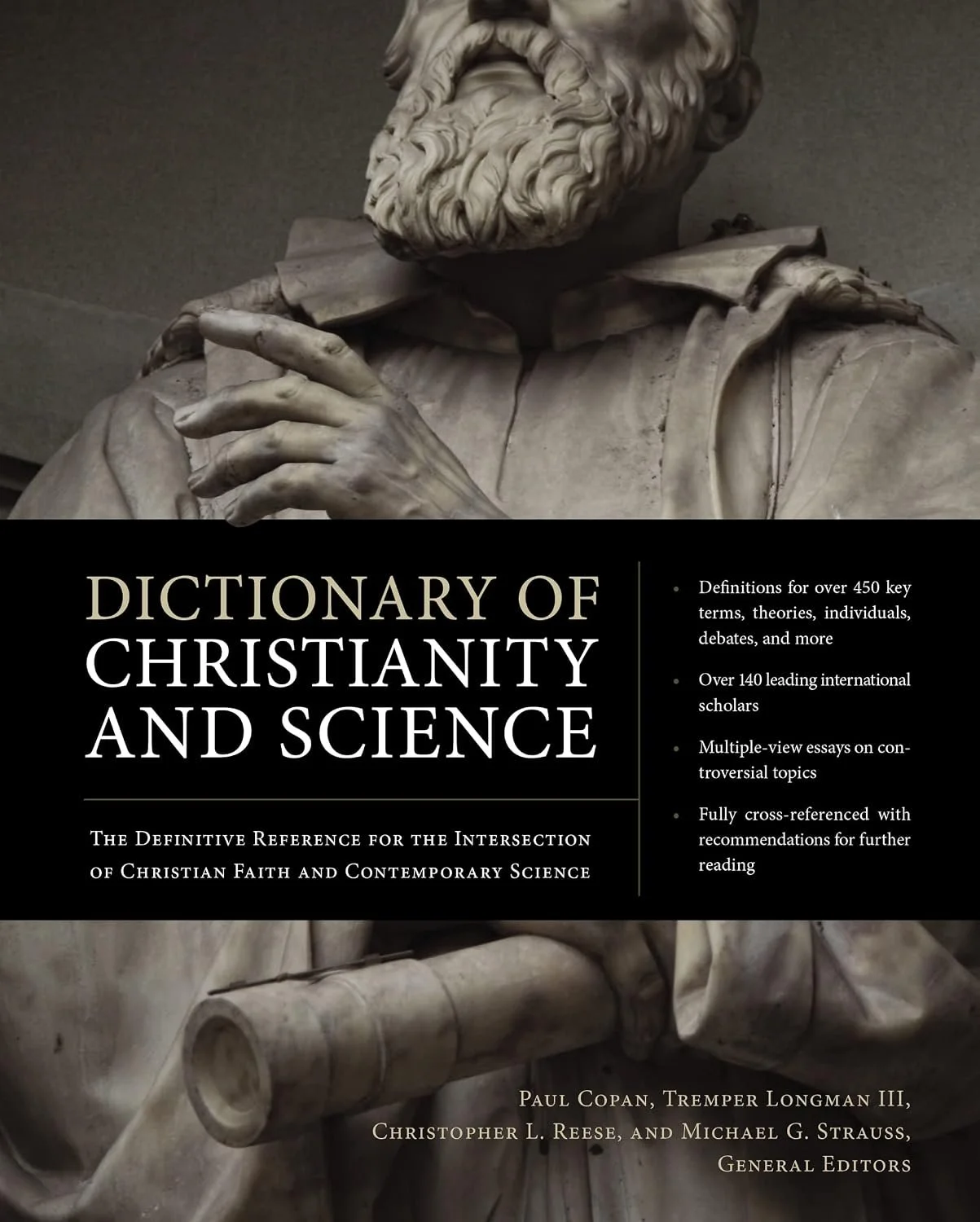
Dictionary of Christianity and Science: The Definitive Reference for the Intersection of Christian Faith and Contemporary Science
Paul Copan et al., eds.
Zondervan (2017). 691 pp.
The conversation between science and Christianity is complex and at times contentious. This ongoing discourse has nevertheless attracted many prominent scientists, theologians, and philosophers of our time. In this light, the recently released Dictionary of Christianity and Science is a welcoming and useful resource for those who seek to understand the important and controversial issues on science and faith.
With over 140 contributors writing on over 450 articles of various lengths, the Dictionary of Christianity and Science serves as an excellent starting point to study and research on the ongoing discourse between science and Christianity. What distinguishes this volume from other works in the field is that it has a narrower aim. This work provides a focused analysis on the complex interaction between modern science and Christianity rather than on science and religion in general. The editors make their purpose explicitly clear from the Introduction that all entries are written by contributors who are “evangelical Christians who are experts in their respective fields of study” (p. 11); the editors also acknowledge that these contributors represent a spectrum of theological and historical backgrounds within evangelical Christianity.
What makes this volume unique is that the entries are categorized into three types (Introduction, Essay, and Multiple-View Discussion). The Introductions are short summaries of a particular topic that give a concise overview of the subject matter. The Essays are longer entries which give greater depth and scope in discussion and analysis, often citing important figures and works for further reference. Most significantly, the Multiple View Discussion entries go into much greater detail is providing the his torical background, ongoing disagreements, and the latest developments that “have bearing on the broader relationship between Christian and scientific thought” (p. 11). As one comes to expect in volumes such as this, it is unlikely that the diversity of voices on such wide-ranging topics would share the same perspective on every issue. However, opposing views are being heard and are being critiqued fairly. The goal of the Multiple-View Discussion entry is to present different viewpoints so that readers can be equipped “to come to their own well-informed conclusions” (p. 11). Topics are wide-ranging. Several of the most controversial issues and salient features of discussion (i.e. Adam and Eve, age of the universe and earth, climate change, and evolution) are written by major thinkers as well as specialists across their respective fields. With lucid presentations of vital topics, each entry provides extremely important overview and background (along with valuable reference) for deeper discussions on both science and Christianity.
The result is a fascinating, rich collection of over 450 entries with diverse and wide-ranging topics. The essays are written by young and established scholars who are currently engaged within the science and Christian faith discourse. This dictionary has proved itself to be an indispensable companion and tool for readers new to science and Christianity as well as to those proficient in the discipline.
But for all its strengths, there are inevitably some areas of weaknesses in a volume like this, which aims to cover a vast amount of thought and issues. You will find that the book neither provides a table of contents in the beginning nor subject/author index at the end. All the entries are categorized in alphabetical order. To be fair, it is challenging to cover all major areas of science and Christianity in a single-volume work; each section can only treat the issues briefly. Those in the field are fully aware that the interdisciplinary relationship between science and theology is complex and multifaceted; an encyclopedic treatment of this matter is beyond the scope of this project. This book, however, serves as a good introduction to the current discourse on the intersection of science and the Christian faith.

Kiem Le is the lead pastor of Living Word Community Church, San Jose, CA and professor of theology at Alliance Evangelical Divinity School, CA. He holds a PhD from Trinity Evangelical Divinity School.