The views expressed in this article are of the author only and do not necessarily represent those of the Center for Pastor Theologians.
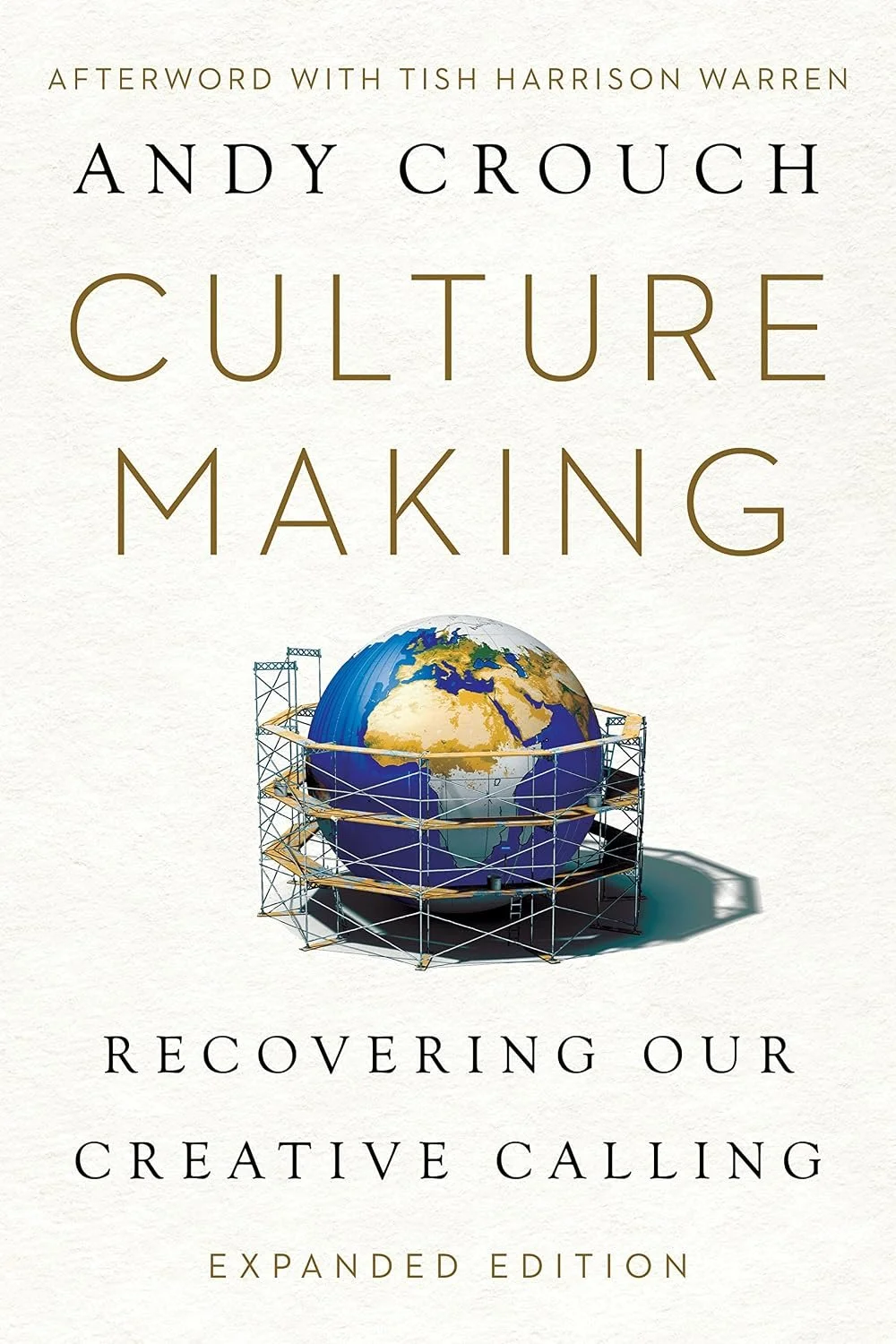
Culture Making: Recovering Our Creative Calling
Andy Courch
IVP (2008). 282 pp.
In recent years evangelical Christians have loved to talk about culture. This has been, by and large, a good thing, helping many of us see that we are all culturally-situated and cannot escape our culture. But for some cultural observers, the desire to escape culture altogether, if not explicitly voiced, lies not-so-far under the surface. Thankfully, most evangelicals do not hold to the modern form of Gnosticism that rejects the material world as evil. However, while they recognize that the new creation will indeed be a physical domain, they have not reckoned seriously with one significant entailment of that physicality: culture.
Culture is a difficult thing to get a handle on. Some might assume “culture” only refers to things like fine wine, classical music, and French poetry. Others might define “culture” the way they think about speaking with an accent. It refers to the way other people do things, but not me. Still others might not give much thought to culture at all.
While Culture Making has been in print for nearly a decade, there remains an ongoing need to understand and engage with culture among many pastors and churches. In each section of this book, Andy Crouch helps us better understand culture and our calling toward it.
In the first part of the book, Crouch, relying on Ken Myers, defines culture as “what we make of the world” (p. 23). And the truth is, we all make something of the world. We all interact with the world in some way and in so doing change it. Over time the accumulated number of small changes that a group makes in some geographical region results in the unique characteristics of that region. Thus, the culture of that region. But all persons of integrity, Christian or not, will run up against some aspect of their culture or a new culture they encounter that they find unjust or immoral. How then should we approach culture?
Crouch’s explanation of four strategies toward culture (condemning, critiquing, copying, or consuming) and how we exercise those strategies is one of the most valuable parts of the book. In short, if our strategies toward culture become postures (fixed dispositions) rather than gestures (occasional movements), then we will inevitably deal wrongly with culture. Rather, Crouch suggests that our fixed disposition toward culture should be as artists and gardeners. That is to say, we should be creators and cultivators of culture. To correct the wrongs in the cultures around us and to advance the good, we should all be “culture makers.”
Part two of the book is essentially a biblical theology of culture. That is to say, with the idea of culture as “what we make of the world” in view, Crouch walks from creation to consummation and highlights the role of culture in the unfolding story of the Bible. The commission that God gave to Adam and Eve to “be fruitful and multiply and fill the earth and subdue it” is a cultural commission. While sin’s entrance into the world has created all sorts of distortions of culture, we cannot deny that from the beginning, God intended the earth to be “culturized” for his glory. Crouch concludes, “In sum, the only story that can truly be named the ‘good news’ is absolutely, completely saturated with culture” (p. 176). And so, he argues, this is why the picture of the new creation is a picture of a city full of the redeemed cultural accomplishments from every culture.
In light of the reality of our place in culture and in the ongoing plan of redemption, Crouch turns his attention to our calling in the last section of the book. He begins with the helpful reminder that culture change is not a simple formula. “The sobering truth is that at a large enough scale, there are no sufficient conditions for cultural changes” (p. 196). Our call is not to change the world per se, but to look for opportunities to create culture wherever we may find ourselves. The book ends, therefore, with some exercises in culture making framed in terms of power, community, and grace. Crouch calls us to create culture not by seeking power, but by using it for the powerless, in a community that spurs us on and holds us accountable, and in a context of giving and receiving grace.
Much more could be said of Crouch’s proposal in this book. It is, on the whole, a compelling and biblically faithful view. While I may have some quibbles with his reading of the role of culture in the history of redemption and in his reading of Genesis 1-11, I was helped by his emphasis on culture, when rightly defined, within the story of Scripture. Perhaps the most significant contribution that Crouch has made in this book is to provide us with a fully-orbed modern exposition and application of the cultural mandate of Genesis 1. That is no small feat.
With the cultural mandate in view, the lingering question is how the church participates in the culture-making project. Other than encouraging individuals and small groups of Christians toward participation in the ongoing project of culture-making, does the church as church have a role to play in this project? Pastors and parishioners alike need to consider this question, both to provide a clear model for Christian faithfulness and to press toward the ongoing fulfillment of the call to make something of the world for the glory of God.

Chris Bruno (PhD, Wheaton College) is the President of Oahu Theological Seminary where he also serves as Professor of New Testament and Biblical Theology. He has written and contributed to many books, most recently The Divine Christology of the Apostle Paul (IVP, 2024, with John J. R. Lee and Thomas R. Schreiner). He is a member of the St. John Fellowship of the Center for Pastor Theologians.