The views expressed in this article are of the author only and do not necessarily represent those of the Center for Pastor Theologians.
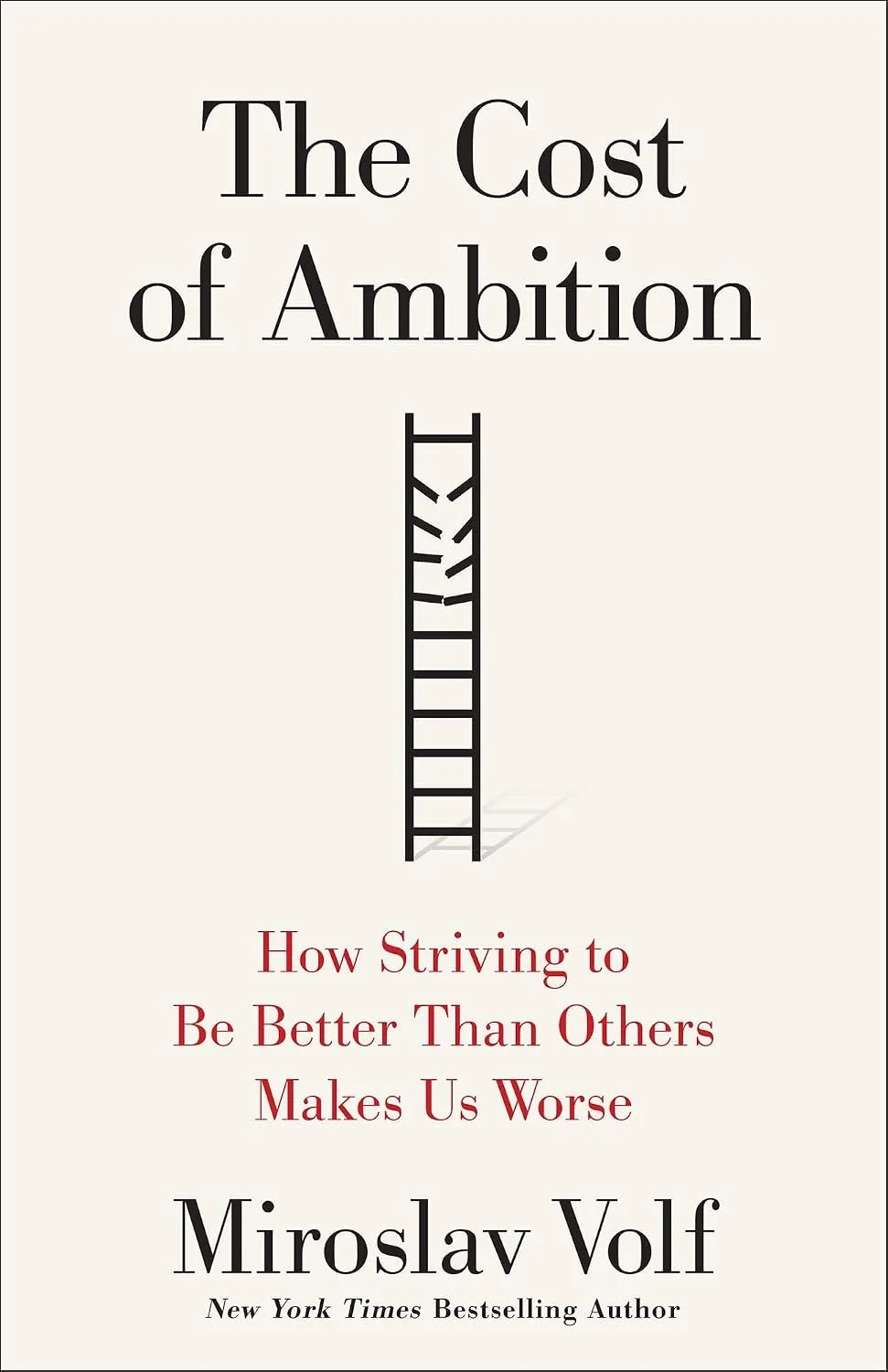
The Cost of Ambition: How Striving to Be Better than Others Makes Us Worse
Miroslav Volf
Brazos (2025). 194 pp.
Miroslav Volf, Professor of Systematic Theology at Yale Divinity School and the Founding Director of the Yale Center for Faith and Culture, has delivered another gem. In The Cost of Ambition Volf exposes how ambition—something he more frequently refers to as striving for superiority over others—is ultimately a vice, saddling us with the burden of both besting others and maintaining our status as long as we can. To support these claims, he draws from several historical figures in the Christian tradition, working from more recent ones back to the Apostle Paul.
He first turns to Kierkegaard whose work might initially appear to reinforce the modern elevation of personal ambition in light of his emphasis on separating the individual from the crowd. As Volf observes, even though Kierkegaard’s works do emphasize the individual, he remains cognizant of how comparison between individuals breeds worry and actually undermines the uniqueness and value of the individual (pp. 36–37). In other words, striving for superiority does not produce a unique self but instead jeopardizes it. What then should be done? Rather than eliminating the differences between people, Kierkegaard’s solution to this incessant striving lies in cultivating contentment in one’s identity before God, not in eliminating the conditions that distinguish people from each other.
From there, Volf unveils similar themes found in John Milton’s renowned poems which cast the fall of Satan and humankind as a quest for superiority. Though the Creator bestowed Satan with goodness, Milton’s account of Satan’s revolt portrays a being unable to accept his ontological station. A similar theme emerges in the fall of humanity where Milton explains how Eve strove to rise above her station with Adam. In contrast to the unquenchable thirst for advancement evident in Satan and Eve, Jesus redefines the true aim of human living by refusing Satan’s temptation for superiority. Rather than reaching for status and power, humanity’s striving should pursue the moral excellencies valued by God.
Finally, Volf turns to the Apostle Paul. Drawing primarily from the Corinthian letters and Philippians, Volf details Paul’s efforts to expose the competitive nature of his readers’ social worlds and its deleterious effects on their souls. In place of the Greco-Roman competitive social structure, Paul introduced a system of values grounded upon the crucified Lord. The cross supplants competitive striving for self-advancement and clears the way for genuine service to others.
In the final chapter, Volf heads off any attempt at spiritualizing a religiously cloaked quest for superiority, namely, out-serving others in a bid to gain greater status or approval as the greater servant. Instead, genuine service that helps others is the end itself and not a means to another end. In the same chapter, Volf also provides a brief overview of the biblical tradition to clinch the argument that ambition and striving for superiority are ultimately vices and not virtues.
The work constitutes an insightful exposé on ambition that interrogates and ultimately condemns a mode of living that is mostly affirmed as a value. Readers interested in learning how ambition came to be baptized as a moral good will only find hints at how the cultural elevation of ambition has occurred in a secular age and will likely wish for more (p. 160). Similarly, those wishing for a more penetrating biblical analysis will find the chapters on Paul and the biblical passages a fitting entry point into the conversation but observe that other relevant passages and stories—like Simon the Sorcerer of Acts 8—are left untapped. Nevertheless, the author’s unmasking of ambition’s degenerative effects is ultimately compelling. The existential burden experienced by many who live under the pressure of expressive individualism supports the argument put forth in the book. With that being said, agreeing with the book’s thesis is one thing. Living it out is something else entirely.
If there is a shortcoming in the book, it would be the underdevelop ment of pragmatic and pastoral resources to support those who would wish to relinquish the quest for superiority in their own lives. Though Volf does identify the solutions the various authors offer, such as contentment, there is a vast difference between knowing contentment is the remedy and becoming content. When the form of this world seeks to conform us to the economy of ambition, disentangling our hearts from its discipleship when we must go on living in this same world will not be a quick process that ends when we discover that the Promethean grasp for superiority is our undoing. That is only the beginning, and those ministering in an age where ambition is most often seen as a virtue will have to contemplate ways to support those willing to venture on this journey.

Benjamin Burkholder is a Fellow in Scripture and Theology at Greystone Theological Institute and an Associate Pastor at North Park EPC in Wexford, PA. He holds a PhD in Systematic Theology from Duquesne University and is a member of the St. Hildegard Fellowship of the Center for Pastor Theologians.