The views expressed in this article are of the author only and do not necessarily represent those of the Center for Pastor Theologians.
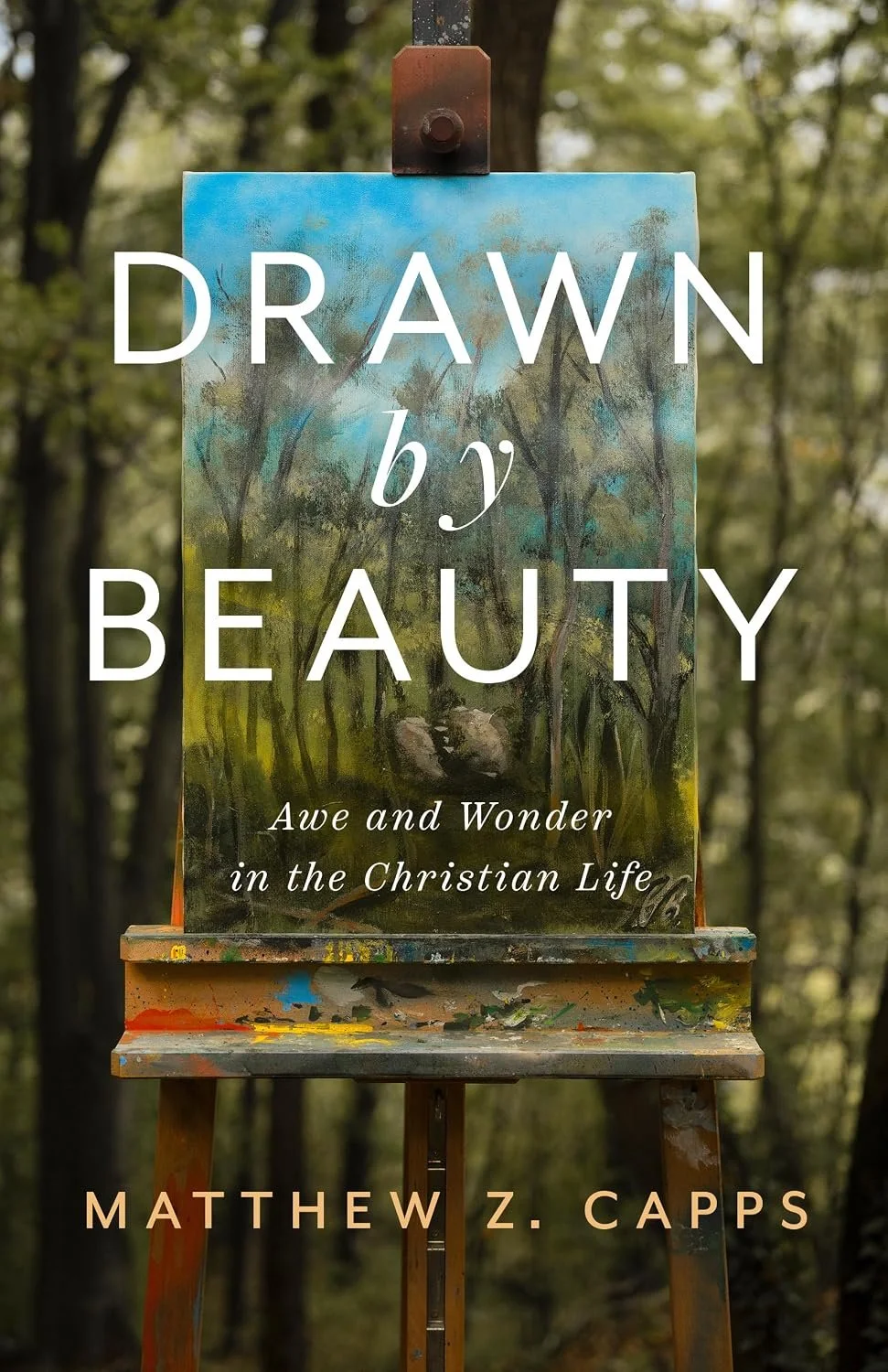
Drawn by Beauty: Awe and Wonder in the Christian Life
Matthew Z. Capps
B&H Academic (2025). 171 pp.
In his acceptance speech for the 1970 Nobel Prize in literature, Aleksandr Solzhenitsyn suggested the classic transcendentals of truth, goodness, and beauty may still hold power in our late modern era. However, at a time when both truth and goodness seem crushed underfoot he proposed it might be “the fantastic, unpredictable, unexplained stems of Beauty” that will soar overhead and “fulfil the work of all three.”
Despite Solzhenitsyn’s hopeful words, beauty has fallen on hard times. Whether in academic neglect of the concept or the vacuous manipulation of beauty as a means to sell products in our consumer culture, we have moved beyond the cliché “beauty is in the eye of the beholder” into the question of whether beauty exists at all, whether it is lost in a sea of opinions, or, perhaps worse, whether it merely reflects a judgment of those with power over others.
In Drawn by Beauty: Awe and Wonder in the Christian Life, Matthew Z. Capps explores how Christians might recapture beauty and how beauty might shape meaningful spiritual formation for both the individual Christians and the broader Christian community. Capps seeks to straddle the academic world and everyday Christians in this book, hoping to provide both meaningful intellectual engagement with aesthetics and an introduction to beauty from a Christian perspective.
The book begins with two foundational chapters, the first on the power of beauty and aesthetics in spiritual formation and the second investigating why beauty has been neglected in many Christian traditions. The next several chapters explore key doctrines within systematic theology—forms of revelation, the nature of God, Christology, theological anthropology, hamartiology, eschatology—seen through the lens of beauty and aesthetics. The book closes with a chapter on beauty in spiritual formation and a chapter on ways in which art is co-creational participation with God, rounded out with an appendix on how to practically engage your senses artistically.
In 171 pages, Capps endeavors quite an undertaking, sweeping through wide streams of thought with an economy of space and at a relatively quick pace. He describes his book as both “a survey and a summary” (p. xii), with the goal of connecting “the topics of beauty and aesthetics to spiritual formation” (p. 10). Admitting that he stands on the shoulders of giants in this field, Capps shares insights from a wide group of thinkers, touching on many important voices in theological engagement with aesthetics, including Augustine of Hippo, Thomas Aquinas, John Calvin, Jonathan Edwards, Hans Urs von Balthasar, and David Bentley Hart, among others. While the majority of his conversation partners are from within the Christian tradition, Capps also gives space to important voices from beyond the Christian borders. He combines a sprinkling of illuminating and genuinely moving quotations from these thinkers with a generous peppering of illustrations from his personal engagement with beauty and the arts, whether walking through Károlyi Palace in Budapest, Hungary or attending Handel’s Messiah in the Duke University Chapel.
Because of undertaking such a great work within such a relatively small space, Capps at times seems to struggle to move from sharing quotes from great thinkers to his own truly integrative thinking on beauty and aesthetics. I was left feeling that the author had read widely and considered these matters deeply but had not brought the level of organization and depth to his work that I would have liked. Perhaps that is inevitable struggle of opening a topic that some find it difficult to address in more than one volume (i.e. Balthasar’s seven volume The Glory of the Lord: A Theological Aesthetics). To write a book like this is a challenge, which Capps admits near the beginning, and to address a wide audience is equally difficult. In a few places the book suffered from a need for more thorough editing, but this is a minor critique to which any author is sympathetic.
Regardless, this is a worthy endeavor for a topic that is gaining increasing attention in our day. Capps’s book is probably best suited as an introduction to beauty and aesthetics, with some helpful reflections on spiritual formation, for the general reader. As artificial intelligence raises questions about human agency and work, beauty will continue to come under fierce questioning. And yet, perhaps, as Solzhenitsyn hinted at in 1970, it remains the key to discovering a truly human way forward.

Matt Erickson (DMin, Western Theological Seimnary) is a pastor, writer, and speaker. Since 2010, Matt has served as the Senior Pastor at Eastbrook Church, an urban, multiracial church in Milwaukee, Wisconsin. He is a member of the St. Irenaeus Fellowship of the CPT and the author of The Pastor as Gardener: A Renewed Vision for Ministry (Eerdmans, 2026).