The views expressed in this article are of the author only and do not necessarily represent those of the Center for Pastor Theologians.
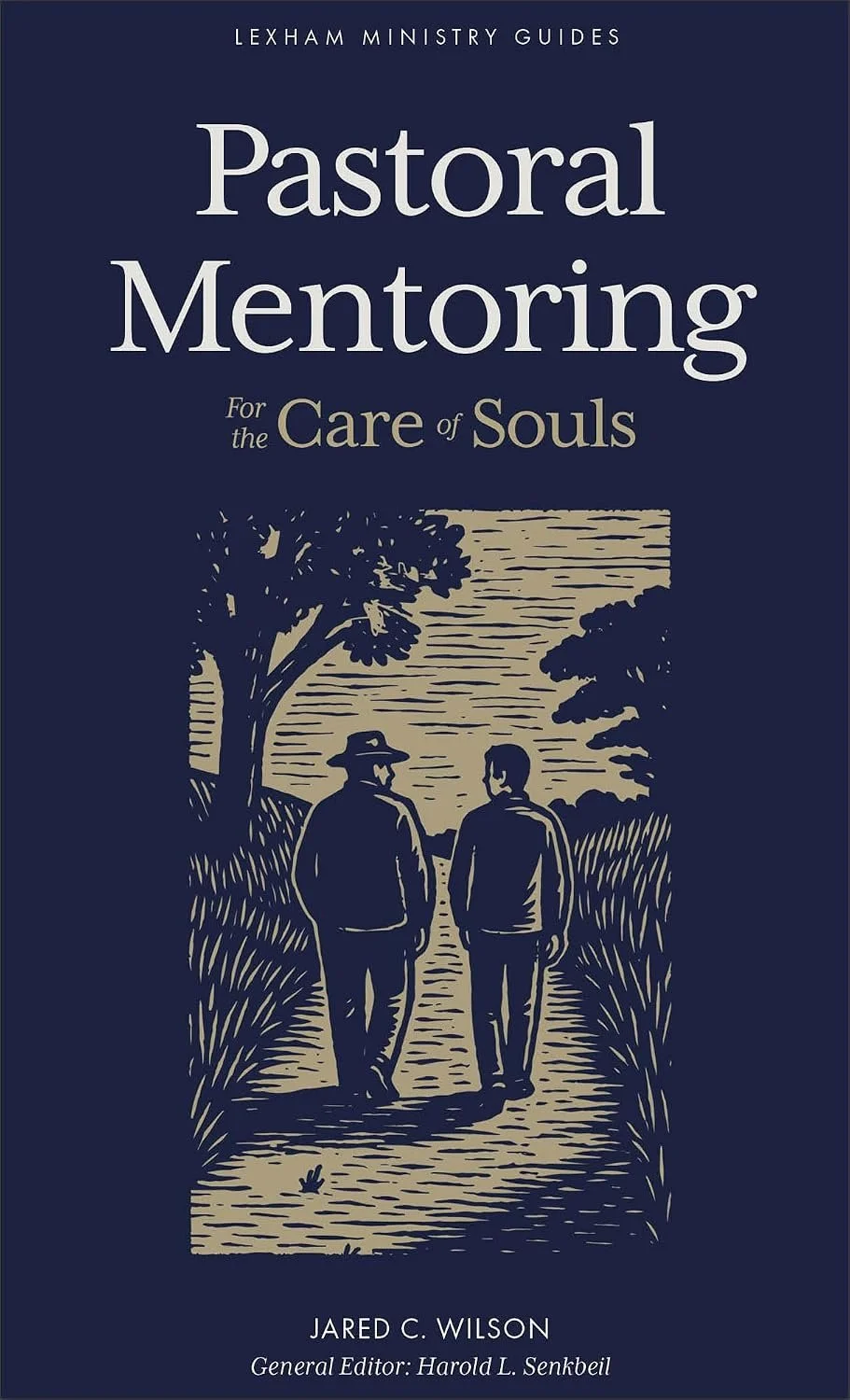
Pastoral Mentoring for the Care of Souls
Jared C. Wilson
Baker (2026). 185 pp.
Is there any answer for the wave of moral failures in the church today? While we may not be able to determine whether the numbers or our awareness has increased more, we can recognize a problem when we see it. On top of that, there are fewer men entering the ministry than leaving it. These trends reveal the need, not just for more pastors, but for more pastors of a different kind and maturity. The church needs pastors whose character will run to the end of their ministries. How can the church raise up a group of biblically qualified and practically capable pastors who can stay faithful in ministry as long as they are called?
These questions and others compelled Harold Senkbeil to write his excellent book The Care of Souls in 2019 and to go on and edit a series of books in the same vein. This series, written predominantly by pastors for pastors, aims to equip church leaders with “effective tools for contemporary ministry” and to do so from within the context of the church with a special sensitivity to the great tradition of soul care in the history of the church (p. xii). The latest in this series is Jared C. Wilson’s Pastoral Mentoring for the Care of Souls, a refreshing and practical proposal for developing a new generation of pastors who are as biblically qualified and spiritually mature as they are practically capable.
Wilson’s story makes him well-suited to write this book. After pastoring a church in New England for a decade, he transitioned onto the staff of Midwestern Baptist Theological Seminary in a role geared more toward writing, marketing, and communication, than to pastoring or teaching. Now known for his many books and articles on practical theology and spiritual life, it was his membership and leadership in a local church that rekindled his passion for pastoral mentoring, particularly the indispensable role of the church alongside the seminary in spiritual formation. Handed a nascent pastoral mentoring program, he was faced with the questions, obstacles, and unknowns of how to train pastors for the future. This book is a gift born out of that experience.
What is pastoral mentoring? Interestingly, the problems in the twenty first century American church connect to concerns the Apostle Paul had for leadership in the first century church. The qualifications in 1 Tim 3, Titus 1, and 1 Pet 5 focus minimally on ability and maximally on character and maturity. Whereas it is easy to think that a great pastor is one who has a certain set of gifts, Paul’s guidance showcases a set of virtues and markers of spiritual growth—a priority for Christlikeness over a specific skill set. Recognizing this distinction, Wilson points out that “our foundational problem is a formational problem” (p. 12).
There are often seasons where a pastor’s gifting outpaces his character, but over time character should catch up. Pastoral mentoring is an essential step in this process. There are things we simply cannot learn in books. In spiritual formation, example beats instruction every time. “For a man to be truly qualified to care for souls, he needs life-on-life mentoring. He needs another pastor or mature leader to speak into his personal spiritual life and bear ongoing witness to how he’s responding, how he’s learning, and how he’s growing” (p. 17). Another way to say it is that “the mentee is pastored into being a pastor” (p. 37).
One of the strengths of the book is that after two opening chapters which lay out the vision for this kind of pastoral mentorship, the following six chapters and concluding appendices transpose the practical necessities of training, building a program, and caring for souls into a formational key. These topics include discerning pastoral readiness, instruction, character, pastoral disposition, spiritual maturity, pastoral mentoring for existing pastors, keys to establishing a residency, and a list of recommended resources.
Two of these chapters are especially strong in confronting some of the pastoral pathologies that plague our churches. In “Discerning Readiness” and “Pastoral Disposition,” Wilson gets into the specifics of how we discern spiritual maturity. If spiritual—and notably emotional—maturity ought to play an even more significant role than business skills, personality traits, entrepreneurial gifting, preaching, and other more measurable qualities, how do we know when someone is growing? When do we know they are ready?
The first step is creating a different assessment framework for churches looking for a pastor and a different set of aspirations for young ministry leaders looking for a church. The goal must be to create an environment that fosters intimacy with God, confidence in his mission and calling, theological training, and at the same time comfort in serving and shepherding real people. Wilson writes, “It’s common for pastoral mentors to find in their mentees a high capacity for intellectual engagement but a low capacity for stress, conflict, empathy, or self-control” (p. 110). While seminary can help with intellectual and theological development, spiritual and emotional maturity are better learned in the real life rough-and-tumble of the church with a faithful, loving mentoring pastor who gives advice and feedback. The creation of apprenticing moments goes a long way toward preparing young leaders for the lifelong joys and struggles of pastoral ministry. The best mentorship programs will shepherd their mentees through these various modes of learning and development.
While there is only so much that can be said in a short book, Wilson invites important future work on this topic. Pastoral mentoring is something every pastor should aspire to do in their church, whether or not they received it themselves. Wilson’s warning that “A pastor cannot feed others with what he does not possess himself” (p. 145) presents an invitation and a challenge to pastor theologians: what we do now will shape the future leadership of our churches.
On this note, Wilson includes a prayer at the beginning of the book worth spending a moment to pray and mediate on: “Give us the humility to look beyond ourselves and the courage to invest in the next generation of church leaders. Give us all the desire for godly wisdom that comes from the heart of Christ, and help us to seek the nurturing of this wisdom, by the gospel of grace, in each other” (p. xx).
Cole Feix (PhD, The Southern Baptist Theological Seminary) is the Senior Pastor, Carlton Landing Community Church, Carlton Landing, OK He is a member of the St. Irenaeus Fellowship of the CPT.