The views expressed in this article are of the author only and do not necessarily represent those of the Center for Pastor Theologians.
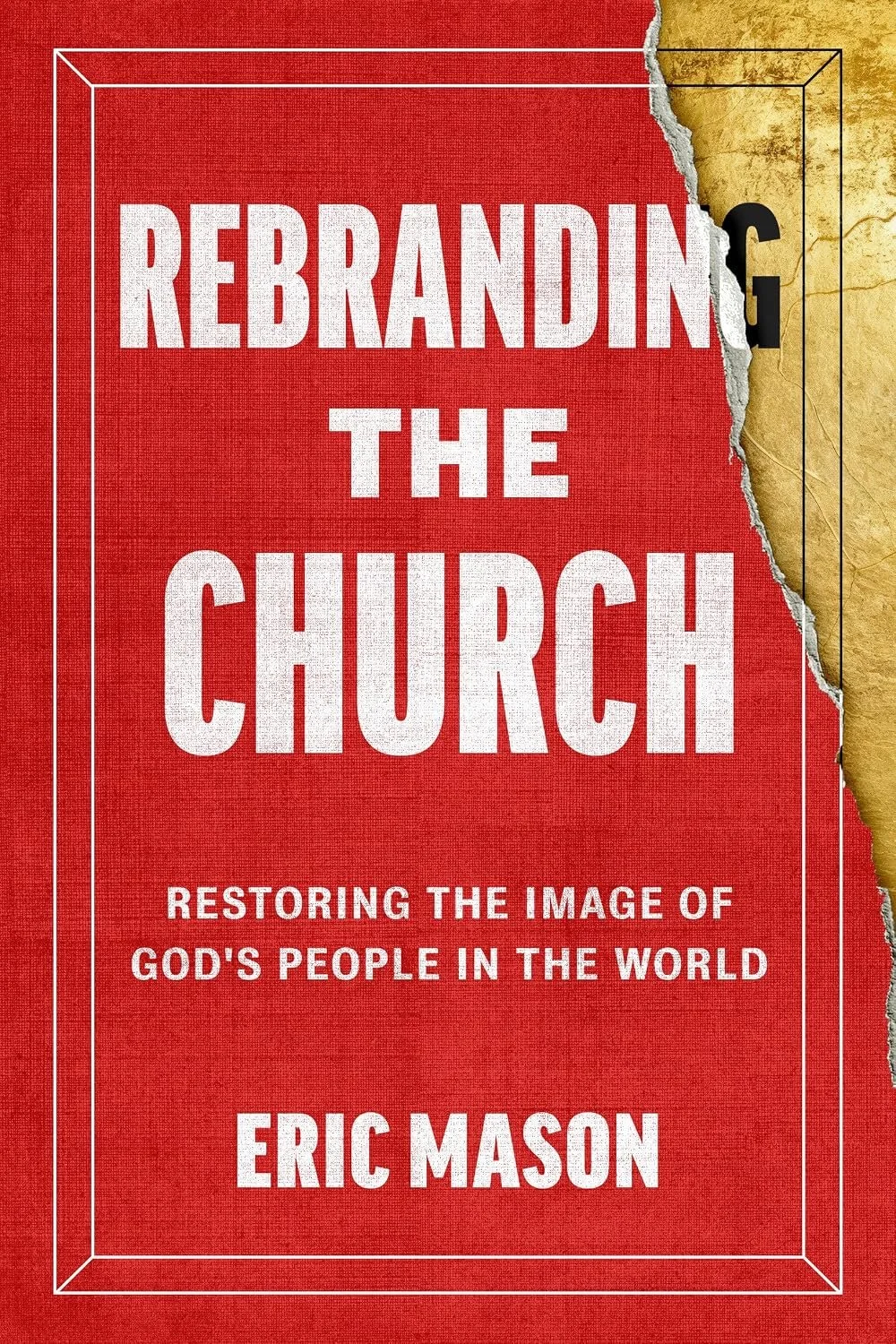
Rebranding the Church: Restoring the Image of God’s People in the World
Eric Mason
Multnomah (2025). 206 pp.
The Center for Pastor Theologians exists to shape pastors theologically for the church of today with tomorrow in view. Quite often this calls us to question, not only the orthodoxy, but also the orthopraxy of the church. Leading the local church often requires change, but what happens when the church changes so much until it is unrecognizable? Many of the challenges that are faced can be addressed not by creating something innovative but by going back to where it began.
Eric Mason’s Rebranding the Church easily tempts one to judge the book by its cover. One would think that Mason’s aim is to offer some new innovative strategy to solve all the church’s problems. On the contrary, Mason does not offer some new attractive method, rather he encourages us to revisit ancient Christianity and restore some of the ancient ways that were lost to time. He begins with asking a seemingly silly question: “What do you think of when you hear the word, Church?” (p. 3). This excellent question penetrates surface assumptions of the present day and leads to a deeper conversation about religion. Mason demonstrates this in chapter one as the simple question leads him to discuss everything from politics to the migration of blacks to other religions in search of community, ethnic pride, and refuge.
Building on his question, Mason covers two central concerns for the church: (1) a right view of Jesus and (2) a right view of what it means to gather. Mason deals extensively with the character of those who gather and reinforces the biblical call to live the gospel out in everyday life. He affirms that this makes a significant impact in rebranding the idea of the local church and exemplifies for the lost what the Christian life is like. He rightfully calls out poor leadership, demonstrating how good Christian character is not only for the pews but also for the pulpit. Mason also expresses how those who grace the pulpit should not only have good Christian character but should be expositors of Scripture, pointing out the now common assessment that “We live in a world of rampant biblical illiteracy” (p. 87). According to Mason, exposition helps keep one from “coming to the Scripture with a biased cultural lens that didn’t exist during the time the Bible was written” (p. 89).
Rebranding the Church compels the reader to get back to missional engagement and biblical community. Building on the biblical record, Mason argues that this crucial element of authentic Christianity is a missing element in many churches. He provides a wonderful example of how missional efforts and community engagement and the intended purpose of the church has been misconstrued (cf. p. 143). The author argues how the church, the Black church specifically, is not the answer to every social crisis in the community. This supposes that there is a misunderstanding to the calling of not just the Black church, but the universal church. Mason’s argument is that we should be concerned with the existential crises that our community face, but that supplying the community with the gospel is of far more importance and is the very assignment of the church, since “The fundamental mission of the church is to make disciples (see Matthew 28:18–20)” (p. 147).
One of the strengths of Rebranding the Church is its popular level writing, which makes it intellectually accessible to those with or without seminary training. It thus allows both congregants and the pastors to engage and benefit in order to conform to ancient, biblical Christianity. The chapters and page lengths will not overwhelm common readers but give just enough to digest and apply. Neither flashy strategy nor intellectual tome, Rebranding the Church is a practical yet robust aid to help Christians reform their lives and the local church.
This book will not initially appeal to all readers. The title could be off-putting to some. And, in fact, you will not “get” the title unless you read the book. Additionally, Mason writes from his own experience, including a cultural sensitivity to the Black experience which may be more appealing to people of color and less appealing to others. Perhaps just for this reason it is a worthwhile read as it presents an opportunity for those unfamiliar with this context to learn from the experiences of others.
Joe Lewis Stevens, Jr. (PhD candidate, Liberty Theological Seminary) is a Pastor of Redeemer Fellowship, Saraland, AL, and an Adjunct Professor at the University of Mobile, AL. He is a member of the St. Irenaus Fellowship of the Center for Pastor Theologians.