The views expressed in this article are of the author only and do not necessarily represent those of the Center for Pastor Theologians.
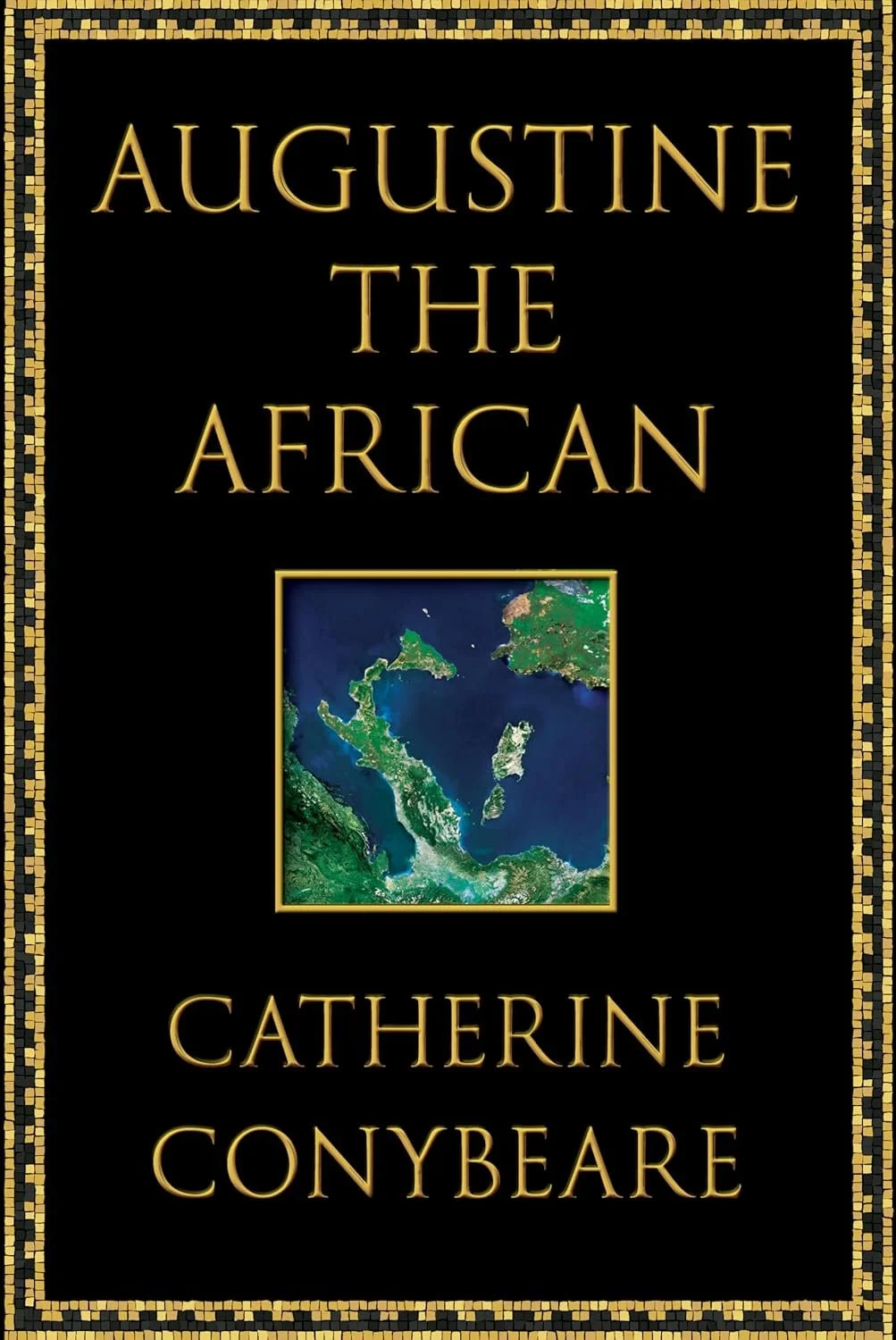
Augustine the African
Catherine Conybeare
Liveright (2025). 268 pp.
One of the central premises of the Center for Pastor Theologians is that social location matters. While we are not prisoners of our environments, we also do not theologize in a vacuum. And so the questions, the conversation partners, and the audiences that inform the work of the pastor and ministry leader will necessarily form their thought in a way that is different than the professor and academic. Where you minister from will necessarily shape the ministry you do.
Catherine Conybeare’s Augustine the African applies this principle to the famous Bishop of Hippo Regius. We do not suffer a shortage of biographies of Augustine, whether it be Henry Chadwick’s introductory volume or the standard-setting Peter Brown tome. What need is there of another account of his life? In answer to this question, Conybeare has put forward what is heretofore the only biography of the Bishop of Hippo that gives extended attention to Augustine’s African identity. The simple but heretofore elusive truth is that Augustine was born African and spent seventy of his seventy-five years on the continent. But the extended attention to Augustine’s Milanese sojourn we find in the Confessions, classical art’s enshrinement of him in our imaginations in the form of an Italian cleric, and the relative disappearance of Christianity from North Africa have all combined to occlude his African identity. What, Conybeare asks, if we took seriously the fact that Augustine was raised in, spoke from, and ministered to Roman Africa?
As a trained classicist, Conybeare is a trustworthy guide in this clarifying journey through Augustine’s life and times. She is observant of the difference between ancient and modern conceptions of Africa, which was concerned less with categories like race or skin color and more with the norms of the Roman Empire. “All his life, Augustine was acutely aware of himself as someone from a small town in Africa, not from dominant Rome or Milan. He doesn’t, however, seem to have been particularly aware of racial difference . . . In the late Roman Empire, social advancement hung on how you spoke and which region of the empire you came from, not what you looked like. An African accent marked you out as inferior, whatever your complexion” (p. xvii). Such important distinctions are not self-evident to the modern mind, and so Augustine the African provides an important resource for thinking through these matters carefully.
Even if “Africa”—an admittedly unwieldly word for a continent diverse in its culture and peoples—does not mean the same thing today as it did in late antiquity, Conybeare argues that it is nonetheless an important facet of Augustine’s identity. This insight brings new light to familiar stories from Augustine’s life. How interesting it is in the Confessions that Augustine tells us he wept over Dido—an African woman—rather than identifying with Aeneas—the literary founder of Rome—when he read the Roman classic The Aeneid? As Conybeare argues, “No wonder he backed Dido against Aeneas, and Carthage against Rome. His passionate identification with Dido was the defiant romanticism of a boy from the provinces who needed his tragic hero” (p. 6).
The book also provides important context for understanding conflicts and controversies that dominated extended periods of Augustine’s life. Conybeare paints a complicated picture of the Donatist controversy, a situation in which Augustine’s allegiance to the Catholic Church could be understood in some sense to be a betrayal of the “African” Church. “It pitted his sense of himself as an African—however ambivalent it may have been at times—against his loyalty to the church into which he had been ordained” (p. 71). In a chapter provocatively titled, “Roman Fragility,” Conybeare also offers a reinterpretation of Augustine’s magnum opus, The City of God. There she paints a picture of an Augustine who is writing a much more highly charged criticism of Rome than many previous readings afforded.
Augustine the African is a beautifully written and well-argued revision of the Augustine we have come to know. Some readers might ask if Conybeare has ventured just a bit further in her reinterpretation of the Bishop of Hippo than the evidence allows. Where, we might ask, could we find corroborating evidence from Augustine’s correspondents and adversaries that his African identity was significant in the way that Conybeare argues? Regardless of how Conybeare might answer these and similar questions, she has given us an impressive and important biography of Augustine which future scholarship must reckon with.

Joey Sherrard (PhD, University of St. Andrews) is the Associate Pastor of Discipleship at Signal Mountain Presbyterian Church in Signal Mountain, TN. He is a Senior Fellow of the Center for Pastor Theologians.