The views expressed in this article are of the author only and do not necessarily represent those of the Center for Pastor Theologians.
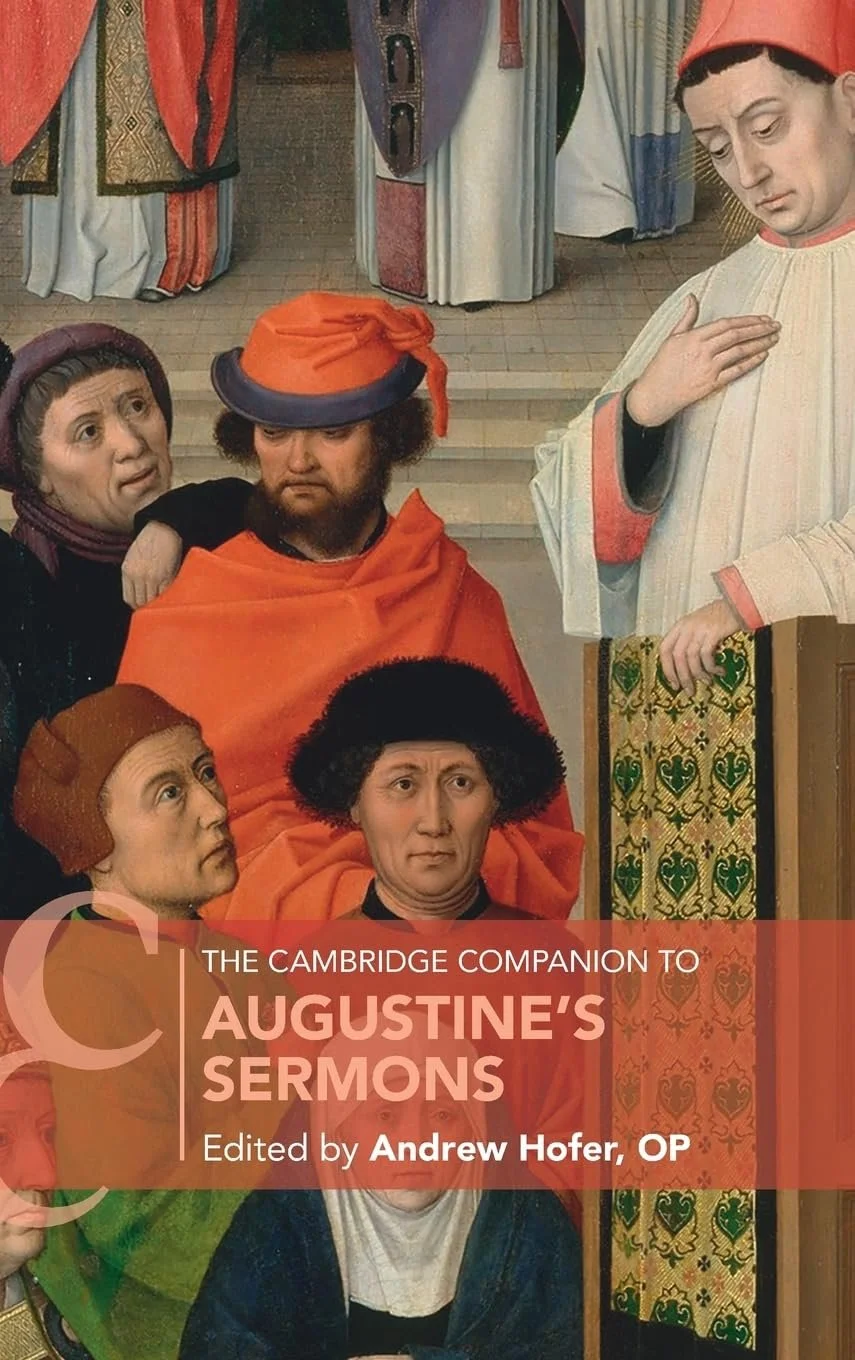
The Cambridge Companion to Augustine’s Sermons
Andrew Hofer, OP
Cambridge University Press (2025). 343 pp.
For those sympathetic to the vision of the pastor theologian, one of the more encouraging developments within academic scholarship is the recognition that the sermon is a theological text, worthy of study and scrutiny for understanding how a figure thought of God and all things in relation to him. This development—already evidenced in Calvin studies, for example—is clear in recent scholarship regarding Augustine of Hippo. While scholars continue to study the great treatises and texts like Confessions, The Trinity, and The City of God, we increasingly find their scholarship supplemented or even focused upon the over nine hundred extant sermons we possess from the Bishop of Hippo. As more and more labor is devoted to studying these works, the wider academic community is discovering what pastor theologians have suspected all along: that these sermons stand up on their own merit as sophisticated works of theology.
But how does a scholar or pastor find their bearings among Augustine’s many sermons? Is there an aid for those who would like to explore the riches of his various homilies to the people of North Africa? For those who ask these questions, The Cambridge Companion to Augustine’s Sermons is a trustworthy guide. Andrew Hofer has assembled an impressive group of contributors and organized their essays around key topical loci. The result is the most comprehensive guide to Augustine’s sermons produced to date.
The volume is structured in three main sections. Part I orients the reader to Augustine’s preaching ministry: the Sitz im Leben of his pastorate in Hippo Regius, the aim of his homiletical work, and the subsequent preservation and transmission of his sermons to posterity. Part II surveys Augustine’s work according to the text and the liturgical season: one chapter each on the Old and New Testament, and then chapters on sermons that were preached on the occasions of Christmastide and New Years, Lent and Eastertide, the Ascension and Pentecost, and finally various feasts marking the memories of martyrs. Part III explores common themes that emerge from his sermons: the Trinity, the Totus Christus, sacraments, grace and the will, love of neighbor, pilgrimage, and the peace of heaven.
Much of what can be said about The Cambridge Companion to Augustine’s Sermons is simple admiration for the essays, each of which comes from a respected authority on their topic. Lewis Ayres’ essay “Preaching on the Trinity” is a succinct summary of his work on Augustine’s doctrine of God, sensitive to the various ways Augustine deploys trinitarian grammar in his sermons and contextualized within the pro-Nicene tradition of which he was a member. Similarly, Sarah Steward-Kroeker’s essay on Augustine’s use of pilgrimage captures the spirit of the scholarship presented in her award-winning book on the same theme. The fruit of these and the other essays in the volume is an accessible guide that can be pulled off the shelf whenever a particular theme presents itself in a sermon, consulted in order to understand how it functions in Augustine’s thought, and utilized as a reference for identifying where else the theme can be found in Augustine’s corpus. It is hard to overstate the value of such a resource.
Of course one could wish that other subjects were given a chapter. A chapter focused on the theme of humility and how Augustine sought to cultivate this virtue in his hearers would have been a worthy addition. Similarly, an essay on how Augustine’s preaching addressed the various political realities that roiled the Roman Empire generally and Africa specifically would also be a fascinating contribution. But this is perhaps to ask too much of an already excellent volume.
The Cambridge Companion to Augustine’s Sermons is an excellent addition to the pastor theologian’s library. It can aid those who wish to explore Augustine’s sermons directly; it can also provide perspective and wisdom for those who wish to look to Augustine for guidance when preaching on similar themes themselves.

Joey Sherrard (PhD, University of St. Andrews) is the Associate Pastor of Discipleship at Signal Mountain Presbyterian Church in Signal Mountain, TN. He is a Senior Fellow of the Center for Pastor Theologians.